Southeast Asia · Indonesia
Bali, Indonesia
8.3405° S, 115.0920° E
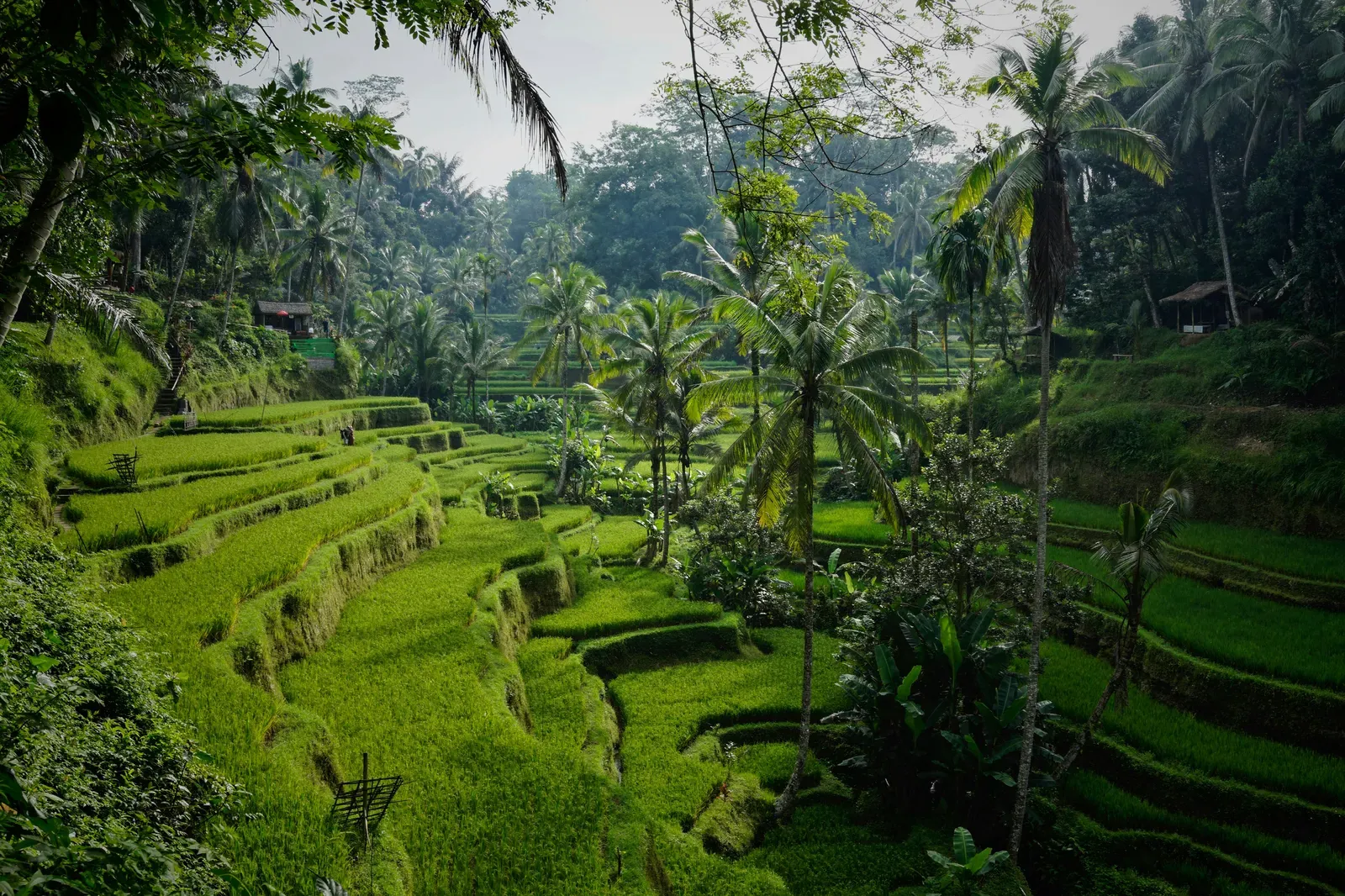
Rice terraces that fold into the hills, temples older than memory, and a coastline built for everything from surf breaks to sunset dinners.
Rice terraces that fold into the hills, temples older than memory, and a coastline built for everything from surf breaks to sunset dinners.
Bali packs a surprising range into one relatively small island — surf towns on the southern peninsula, terraced rice paddies around Ubud, quiet black-sand coastlines up north, and a volcano you can hike before sunrise. Most first-time visitors base in two or three areas rather than one.
Traffic and pace vary enormously by region: the south moves fast and stays busy year-round, while areas like Sidemen and North Bali feel closer to how the island looked decades ago.
Bali's Hindu traditions set it apart from the rest of majority-Muslim Indonesia, visible in daily life through small woven offerings (canang sari) placed outside homes each morning, and in elaborate temple ceremonies that punctuate the calendar.
Why Bali stayed Hindu. When Islam spread through the Indonesian archipelago between the 15th and 17th centuries, the Hindu Majapahit court and much of its nobility retreated to Bali rather than convert, carrying their religious and artistic traditions with them. That history is why Bali remains a genuine Hindu island inside the world's largest Muslim-majority country — not a tourist-era invention, but a centuries-old refuge that shaped everything from temple architecture to the daily canang sari offerings still placed by hand each morning.
The regional range is a practical planning fact, not just scenery. The south (Kuta, Seminyak, Canggu, Uluwatu) is genuinely a different pace of life from Ubud's rice-terrace interior or Sidemen and North Bali's quieter, older Bali — meaning "visiting Bali" without picking a specific region first often means an itinerary that fights itself, spending real transit time bouncing between a beach-club pace and a jungle-quiet pace in the same week.
Subak, the irrigation system behind the postcard rice terraces. This is itself a UNESCO World Heritage-recognized cooperative water-management system, centuries old, still functioning today — the terraces aren't just scenic, they're a living agricultural technology still actively used by Balinese farmers.
Bali is warm year-round, so timing is really about rain and crowds.
The most reliable weather and the busiest months.
Consistent swells on the southwest coast.
Short, heavy downpours common but rarely last all day.
Apr–Oct, Dry Season. This window is genuinely the most reliable weather on the island, which is exactly why it's also the busiest and most expensive — villa and flight prices climb noticeably in July-August and around New Year specifically, not the dry season as a whole. Booking two to three months ahead matters much more in those two peak windows than in the shoulder months of April, May, or September.
May–Sep, Best for Surf. Consistent Indian Ocean swell hits the southwest-facing coast through this window, which is why Uluwatu, Canggu, and Bingin build their entire identity around surf culture — the swell pattern is a genuine oceanographic fact tied to Southern Hemisphere winter storm systems, not a marketing season.
Nov–Mar, Wet Season. The honest version of "wet season" here is usually an intense but short afternoon downpour, not all-day rain — mornings are frequently clear. Villa rates drop meaningfully in this window, and for travelers prioritizing budget over guaranteed sun, it's a genuinely reasonable trade.
Worth knowing regardless of season. Nyepi, the Balinese Hindu New Year, typically falls in March and is unlike anything else — the entire island observes a Day of Silence, with no flights in or out, no lights after dark, and visitors required to stay inside their hotel grounds for 24 hours. It's not a reason to avoid Bali, but it is a real logistical fact that can disrupt an arrival or departure date if not checked in advance.
Cards widely accepted in the south; carry cash for warungs and markets.
Valid for 30 days and extendable once; check requirements before you fly.
A private driver for day trips is common and affordable.
A local eSIM covers nearly the whole island reliably.
A sarong and sash are often required and easy to rent on-site.
Stick to bottled or filtered water.
Currency & Money. Cards work fine in Seminyak, Canggu, and most hotels, but the moment you're at a warung, a local market, or paying a scooter rental deposit, cash is genuinely expected. ATMs are plentiful in the south but worth using inside a bank branch or mall where possible — standalone street ATMs have a real history of card-skimming incidents reported by travelers. Money-changer scams (short-changing, rigged calculators) are a known pattern too; licensed changers displaying "PVA Berizin" authorization are the safer bet over unusually generous rates offered on the street.
Visa. The 30-day visa-on-arrival is genuinely extendable once for another 30 days through an immigration office visit, commonly arranged through a local agent for a fee rather than navigating it solo. Overstaying is taken seriously and carries a real per-day fine, so tracking the exact expiry date matters more than it might seem for a casual island trip.
Getting Around. Scooters are the cheapest, most flexible way around, but Bali's scooter accident rate among tourists is genuinely high — often unfamiliar left-hand traffic patterns, mixed with unfamiliar riders and inconsistent road surfaces. A private driver, commonly booked by the day for day-trips between regions, is a real, affordable alternative that removes that specific risk entirely, and is worth strongly considering for anyone not already an experienced rider.
Internet. A local eSIM activated before or on arrival covers the island reliably, including most of the interior — genuinely one of the more digitally-connected islands in Southeast Asia, useful for remote work as much as navigation.
Local Customs. Covering shoulders and knees at temples isn't optional courtesy — it's an enforced entry requirement at active temples, with sarongs and sashes typically available to rent or borrow right at the entrance if you arrive without one. Stepping over (rather than on) the canang sari offerings placed on sidewalks and thresholds is a small, genuinely appreciated local courtesy.
Health. Tap water isn't safe to drink; bottled or filtered water is the standard precaution, and it's worth checking that ice at smaller local establishments is made from filtered water too, since this is a more common source of stomach upset for visitors than food itself.
Bali is generally safe — the more common risks are traffic (scooter accidents), strong ocean currents at certain beaches, and standard petty theft precautions.
Scooter accidents are genuinely the most common serious incident visitors experience in Bali — not petty crime. Unfamiliar left-hand traffic, riders without real motorbike experience, and inconsistent road surfaces combine into real risk; a helmet, an actual motorcycle license, and travel insurance that explicitly covers scooter accidents are all worth confirming before renting one, since many standard policies exclude scooter injuries by default.
Ocean currents claim more lives than almost anything else here. Certain south-coast beaches, including parts of Uluwatu and areas without lifeguard coverage, have genuine rip current risk — sticking to beaches with visible flag systems and lifeguard presence (Kuta, Legian, Seminyak) is a real, meaningful precaution, not overcaution.
Petty theft follows recognizable patterns worth knowing specifically. Bag-snatching from moving scooters has happened enough to be a known risk — carrying bags on the side away from the road, not looped loosely over a shoulder, addresses this directly. At Uluwatu and the Ubud Monkey Forest specifically, macaques are known to grab sunglasses, phones, and food with real skill; not carrying loose valuables visibly in hand at these two specific spots avoids the most common version of this problem.
Bali remains one of the better-value destinations in Southeast Asia.
| Item | Budget | Mid-range | Luxury |
|---|---|---|---|
| Lodging (per night) | $15 – $35 | $60 – $150 | $250 – $800+ |
| Food (per day) | $8 – $15 | $25 – $45 | $60 – $120 |
| Local transport (per day) | $5 – $8 (scooter) | $25 – $40 (driver) | $60+ (driver) |
| Activities | $5 – $15 | $20 – $50 | $50 – $150+ |
| Domestic flights | $40 – $80 | $40 – $80 | $100 – $200 |
Why Bali is such genuine value comes down to local wage levels and a cost of living dramatically lower than most Western economies — the same $250+/night villa tier that would cost several times more in comparable Mediterranean or Caribbean destinations, because labor, land, and local food costs simply sit at a different baseline entirely.
The scooter-versus-driver gap in local transport isn't just about money. A scooter is genuinely cheaper day to day, but the private driver option — often booked for a full day covering multiple stops — trades that savings for both safety (removing the scooter accident risk discussed in Safety) and comfort on longer interior routes, where road conditions and traffic can make self-driving genuinely tiring.
Domestic flights don't actually apply to most Bali itineraries the way they would in Kenya or a multi-region country — this line item mainly matters if combining Bali with other Indonesian islands (Lombok, Flores, Java) in the same trip, since Bali itself is compact enough to cover entirely by road.
What luxury actually buys here is less about the room itself and more about land — private pool villas with real acreage, jungle or rice-terrace seclusion, and staff-to-guest ratios that would cost dramatically more in most other parts of the world.
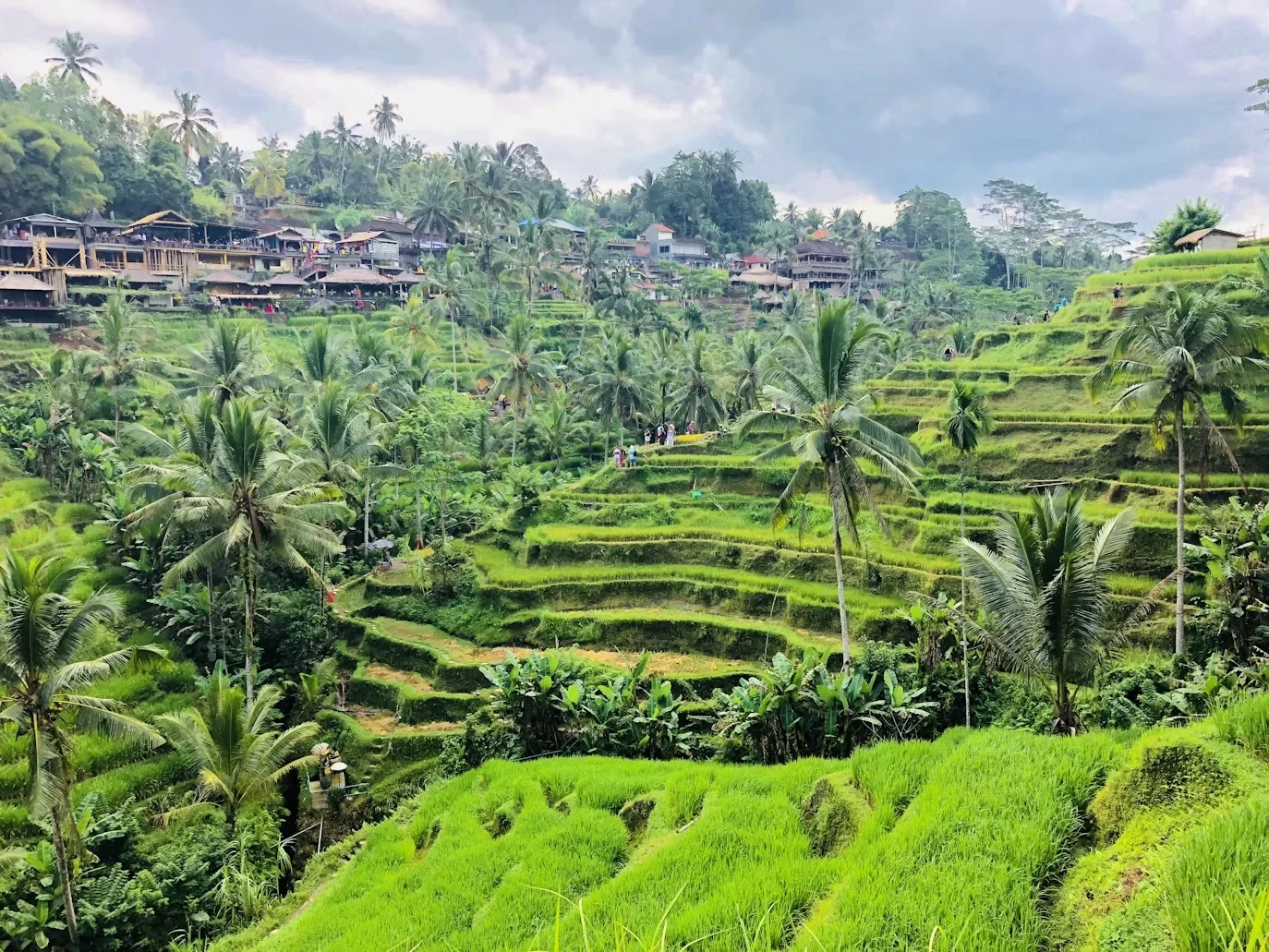
Ubud's classic terraced hillside
Best visited early morning, before tour buses arrive and the light gets harsh.
Explore Experiences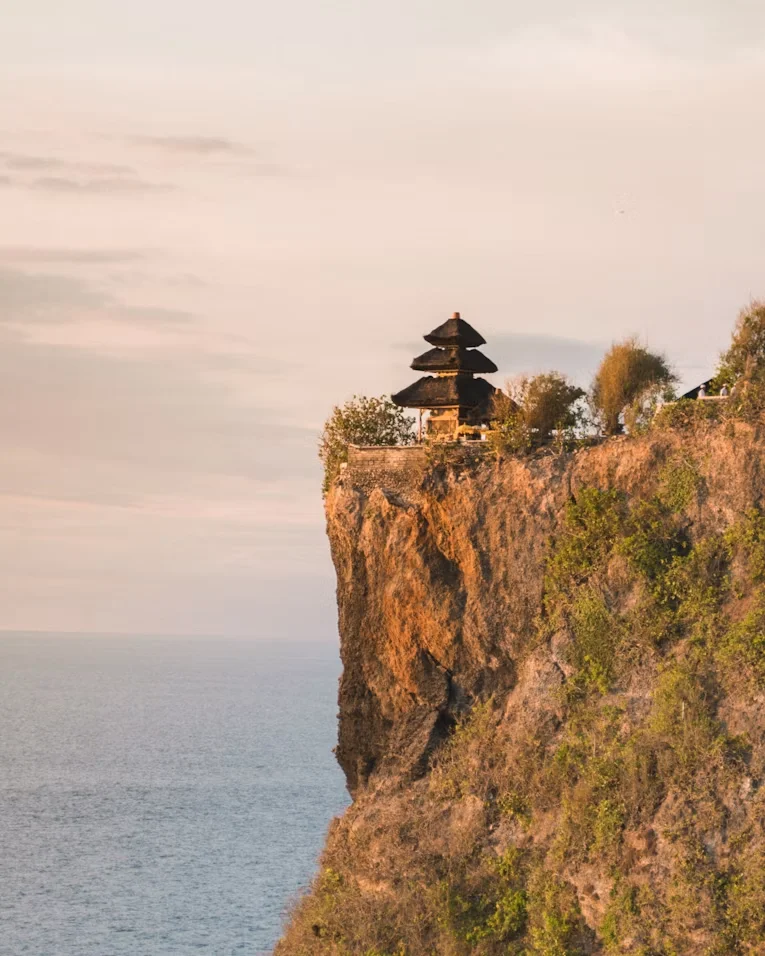
Clifftop temple with a sunset fire dance
Time your visit around the evening fire dance — it's genuinely worth planning around.
Explore Experiences
A pre-dawn trek to a volcano-top sunrise
A guide is genuinely required here, and the pre-dawn start means booking transport the night before.
Explore ExperiencesTegalalang Rice Terraces. These terraces are part of the subak system mentioned in the Overview — a genuinely functioning agricultural cooperative, not a static viewpoint built for tourism. Arriving before roughly 8am matters for two real reasons, not just crowd avoidance: the morning light is dramatically better for photos, and farmers are often actually working the fields at that hour, which tour-bus-hour visits usually miss entirely.
Uluwatu Temple. The clifftop setting alone is worth the visit, but the Kecak fire dance performed at sunset is a distinct, ticketed cultural performance — a chanting, percussion-free vocal dance depicting the Ramayana epic, genuinely unlike anything else on the island. Booking the performance in advance during peak season avoids arriving to find it sold out.
Mount Batur Sunrise Hike. This is a real, moderately strenuous trek, not a casual walk — typically a 2am–3am start to reach the summit by sunrise, on volcanic scree that's considerably easier with proper shoes and a guide who knows the current trail conditions. A guide isn't just recommended here; it's effectively required, both for safety on the dark ascent and because most tour operators won't sell the experience without one.
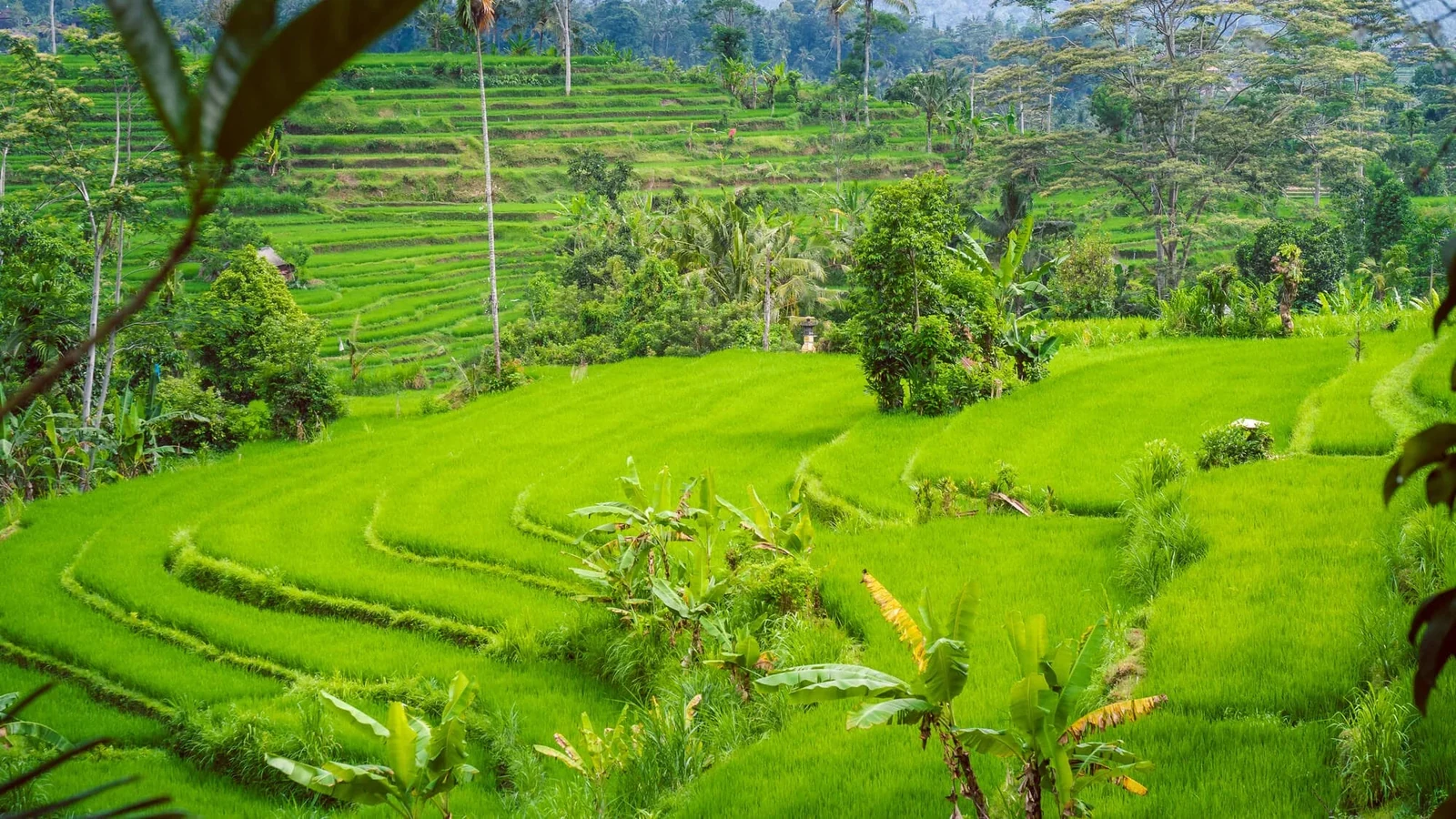
Rice terraces without the Ubud crowds
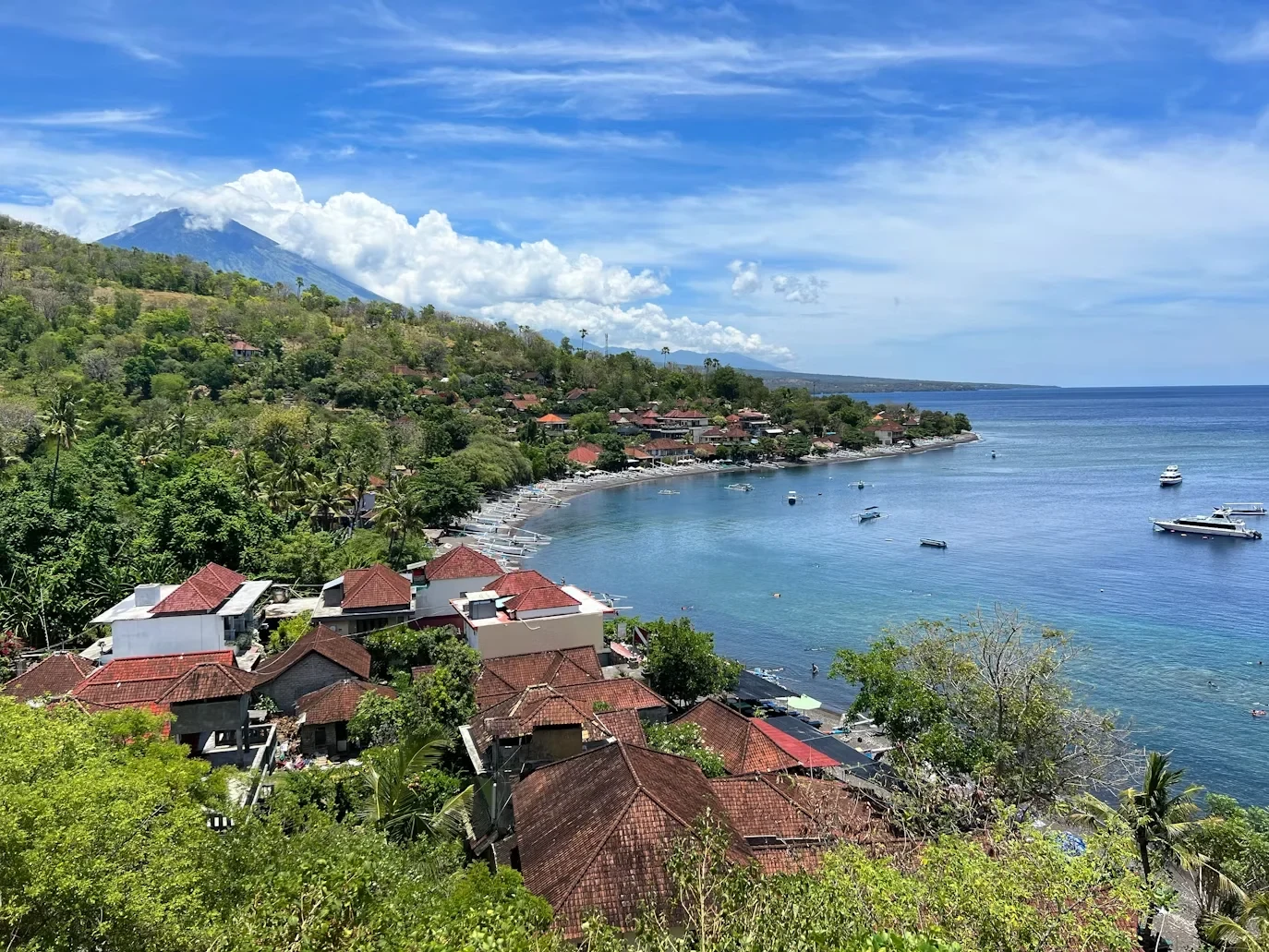
Slow fishing villages on the northeast shore
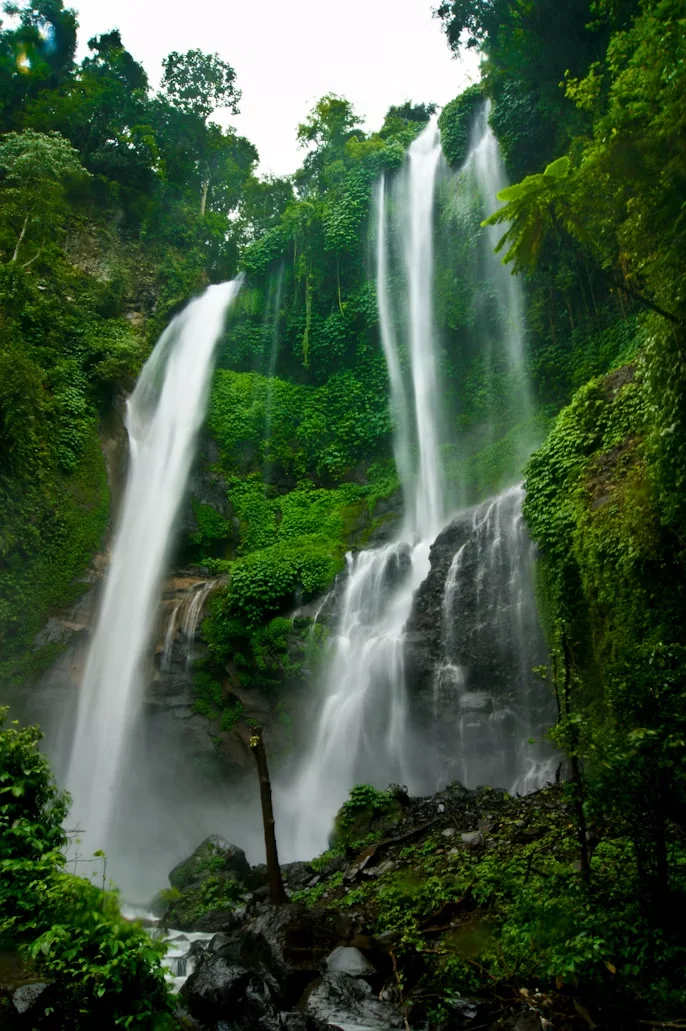
A short jungle hike to Bali's tallest falls
Sidemen Valley. This is genuinely what Ubud's rice terraces looked like before mass tourism arrived — the same subak-irrigated landscape, just without the crowds, cafes, and tour buses, largely because it sits further from the airport and doesn't have Ubud's decades of accumulated tourism infrastructure.
Amed's Black-Sand Coast. The black sand is volcanic in origin, and the coastline here is genuinely built around slow-paced fishing village life rather than beach-club culture. It's also one of Bali's better snorkeling and diving bases, including access to a sunken Japanese shipwreck from World War II lying close enough to shore for accessible diving.
Sekumpul Waterfall. Reaching Bali's tallest waterfall genuinely requires a jungle hike with some uneven, occasionally slippery terrain — not a roadside viewpoint. The reward is a waterfall considerably less crowded than the more accessible falls near Ubud, and correspondingly more dramatic given its height.

Private pool overlooking a river valley
A private pool overlooking a river valley makes for a genuinely romantic, secluded base.
Check Availability
Walkable to surf breaks and beach clubs
Walkable to surf breaks and beach clubs, genuinely central to Canggu's laid-back scene.
Check Availability
Rice-terrace views, family-run hospitality
Rice-terrace views and family-run hospitality, a genuinely quieter side of Bali.
Check AvailabilityUbud Jungle Villa Resort. A private pool overlooking a river valley is a genuinely different register of privacy than a standard resort room — Ubud's interior geography, with its steep river gorges, is exactly what makes this kind of secluded, jungle-immersed setting possible so close to town.
Canggu Boutique Hotel. Being walkable to surf breaks and beach clubs matters more in Canggu specifically than almost anywhere else in Bali, since the area's entire appeal is built around a walkable, bike-friendly stretch of coast — a stay outside that walkable core often means depending on scooters or drivers for everything, undercutting the point of choosing Canggu at all.
Sidemen Guesthouse. Family-run hospitality here tends to mean genuine local connection — home-cooked meals, direct insight into rice-terrace walks and local ceremonies — in a region that hasn't been built around large-scale resort infrastructure the way the south coast has.
From roadside warungs to clifftop fine dining.
Nasi campur and babi guling, often the best value.
Rice-paddy views with health-focused menus.
Higher-end restaurants built for the view.
Warung-Style Eateries. A warung is a small, family-run local eatery, and nasi campur (literally "mixed rice," a plate built from rice plus a rotating selection of small side dishes) is the genuine everyday meal of Bali, not a tourist simplification. Babi guling — spit-roasted, spice-stuffed suckling pig — is worth noting as specifically a Balinese Hindu dish, common here in a way it wouldn't be in Muslim-majority parts of Indonesia where pork isn't eaten.
Farm-to-Table Cafés. Ubud's health-focused café scene traces directly back to the town's decades-long identity as a yoga and wellness destination — the rice-paddy-view menus built around fresh, plant-forward food reflect that specific audience, not a broader Balinese culinary trend.
Clifftop Sunset Dining. Uluwatu and Seminyak's higher-end restaurants are genuinely built around the sunset itself as much as the food — reservations timed roughly an hour before sunset, specifically for a west-facing table, are worth requesting directly when booking rather than assumed.
Canggu and Seminyak carry the beach-club scene; Ubud stays quieter.
Water parks, monkey forests, and gentle rice-terrace walks.
Beach clubs to quiet bars. Canggu and Seminyak's beach-club scene is a genuinely distinct Bali export — sprawling pool-and-lounge venues that function as day-to-night destinations in their own right, not just bars. Ubud, by contrast, deliberately leans into its wellness-town identity after dark; quiet, earlier nights are the norm, which is worth knowing if nightlife specifically is a trip priority.
Widely family-friendly. Bali's family infrastructure is genuinely mature — water parks, gentle rice-terrace walks suitable for most ages, and the Ubud Monkey Forest as a real, popular family stop (though worth pairing with the same macaque-caution advice from the Safety section, since the monkeys interact directly with visitors there).
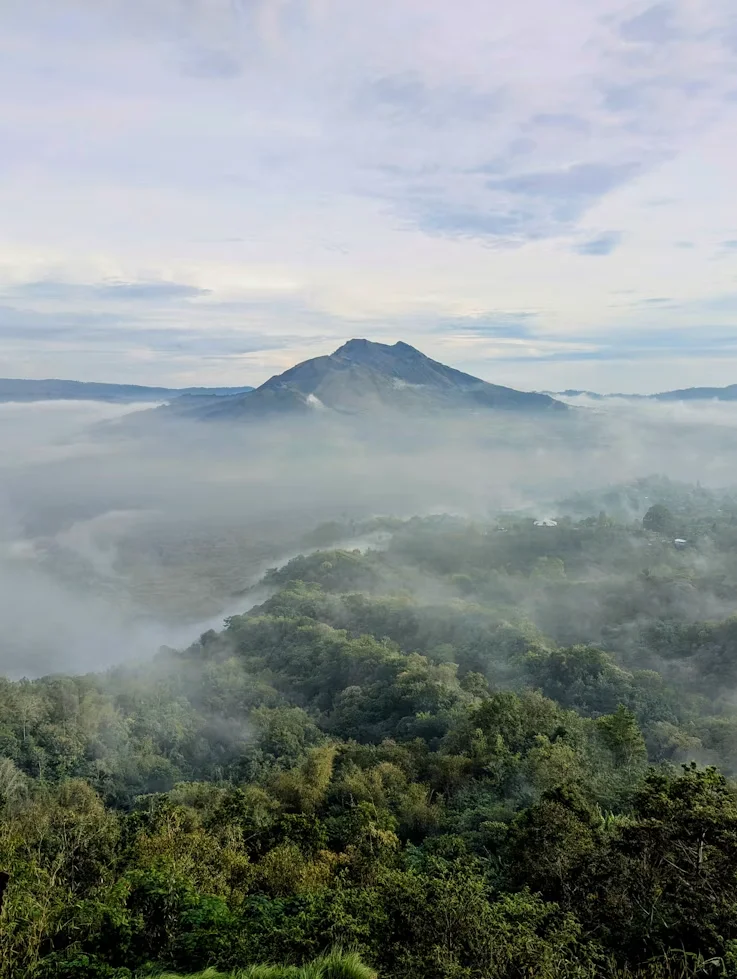
Clouds below you, first light over the caldera
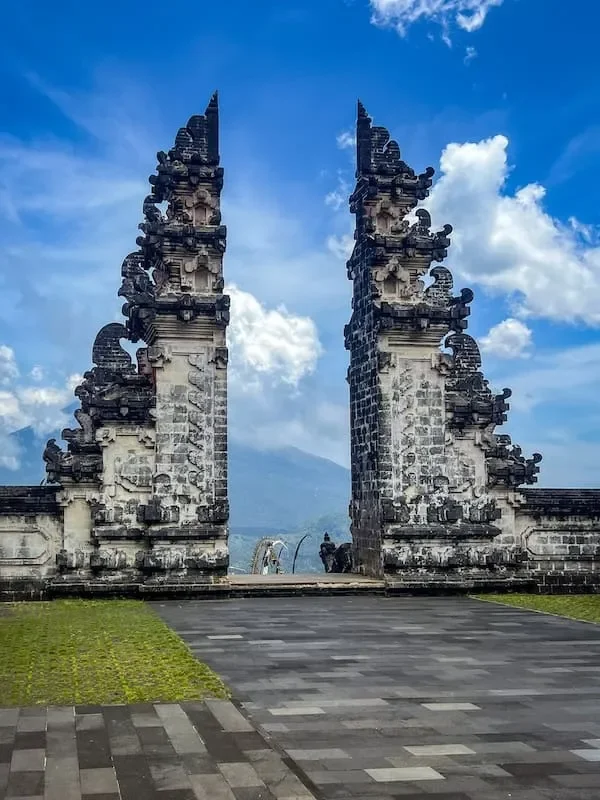
The famous mirrored-temple gate shot
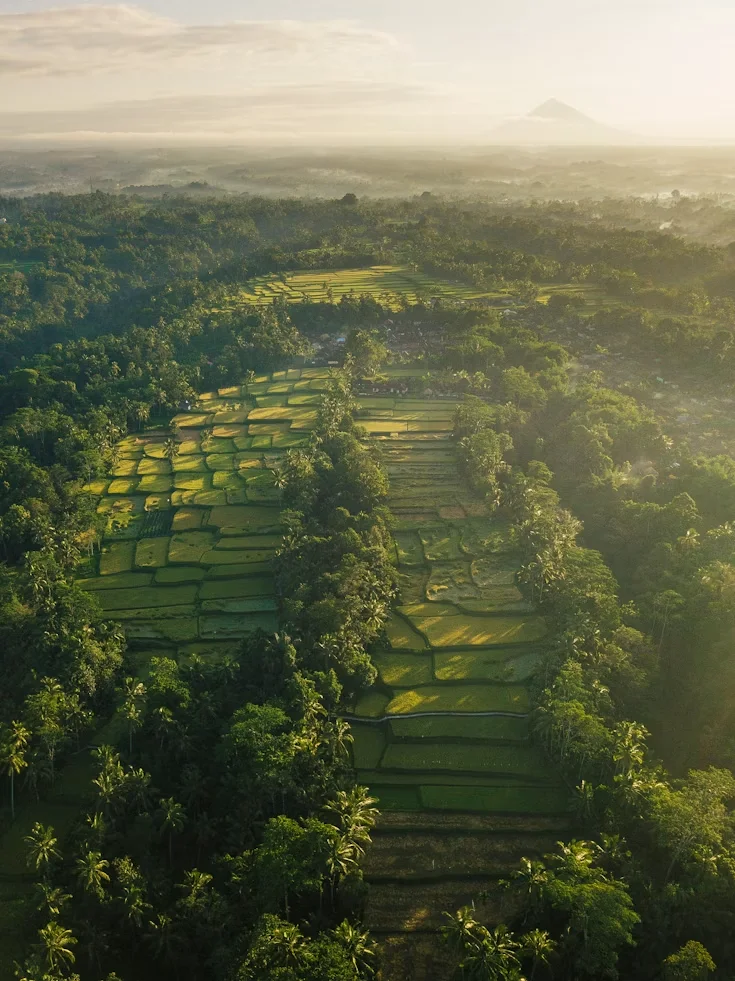
Empty terraces before the crowds
Mount Batur Summit. The cloud-below-you effect is genuinely weather-dependent — clearest on dry-season mornings, less reliable in wet season — and the pre-dawn hike described in Attractions is what gets you there in time; arriving after sunrise misses the actual moment entirely.
Gates of Heaven, Lempuyang. The famous "mirror" shot — the temple gate perfectly reflected beneath the photo's subject — isn't a natural water feature; it's created with a small mirror held beneath the camera lens by staff on site, a detail worth knowing so the effect doesn't come as a surprise. The real, unmirrored view from the gate itself, overlooking the temple complex toward Mount Agung, is worth the visit regardless.
Tegalalang at First Light. Genuinely empty terrace shots require arriving before roughly 8am — by mid-morning, tour groups and the entrance queue change the scene substantially, so this is one of the few Bali photo spots where the timing advice isn't exaggeration.
Sandals. Genuinely the default footwear for most of a Bali trip — beach days, warungs, even many casual restaurants — but worth pairing with real closed-toe grippy shoes rather than relying on sandals for the Batur ascent, since loose volcanic scree in the dark is a real slip risk sandals don't handle well.
Light, breathable clothing. Bali's humidity is fairly constant year-round regardless of season, which is why breathable natural fabrics matter more here than in a dry climate — synthetic athletic wear that doesn't breathe tends to feel noticeably worse by midday.
A sarong for temples. This isn't just for temple visits specifically — a sarong doubles as a beach cover-up, a light blanket on an air-conditioned car ride, and a quick modesty layer at the handful of local sites that expect covered knees outside temples too, making it worth packing even on a beach-focused itinerary.
Reef-safe sunscreen. As covered in Practical Information, Bali's equatorial sun is genuinely strong year-round, and reef-safe formulas matter specifically around the snorkeling and diving spots mentioned in Hidden Gems, where regular sunscreen chemicals measurably damage coral over time.
Mosquito repellent. Dengue fever is a real, present risk in Bali, transmitted by day-biting mosquitoes rather than only at dusk — meaning repellent matters throughout the day, not just evenings, unlike malaria-focused advice in destinations where night-biting mosquitoes are the primary concern.
A light rain jacket. Worth packing regardless of season — even dry-season Bali gets occasional sharp afternoon showers, and a compact rain layer handles this better than ducking under cover and losing travel time.
Power adapter (Type C/F). Indonesia uses the European-style two-round-pin socket, which catches travelers coming from the UK, US, or Australia off guard more often than most packing lists acknowledge.
7–10 days lets you split time between the south coast and highlands without feeling rushed.
Yes — one of Southeast Asia's most solo- and female-traveler-friendly destinations.
For July–August and New Year, yes — book 2–3 months ahead. Otherwise fairly flexible.
Light, breathable clothing, a sarong for temples, reef-safe sunscreen, and a light rain jacket.
How many days do I actually need? The 7-10 day figure accounts for genuinely different regions — the south coast and the highland interior around Ubud and Sidemen feel like different trips entirely, and splitting time properly between them, rather than day-tripping from one base, is what actually needs the extra days.
Is it safe for solo travelers? Yes, and specifically for solo women — Bali has one of the most established solo and female-traveler infrastructures in Southeast Asia, from women-only guesthouses in Ubud to a genuinely well-worn solo-travel circuit. The real precautions worth knowing are covered in Safety above: scooter accidents, not personal safety, are the more statistically relevant risk.
Do I need to book accommodation far in advance? Only really matters for July-August and the New Year period specifically, when both flights and popular villas fill up and prices rise — outside those two windows, Bali's accommodation market is large and flexible enough that even a few days' notice is usually fine.
What should I pack? The full reasoning behind each item — including why the sarong matters beyond temples, and the dengue-specific mosquito advice — is covered in the Packing section above.
Get the complete Bali guide as a beautifully designed, offline-ready PDF — every section organized for actual use in the field, plus a full packing checklist.
Turn your research into a trip designed around your actual dates, budget, and travel style — planned by a person, not a form.
EXPLORE GOATLAS CONSULTATIONSGenuinely recommended places to stay and eat, not filler — booked through our trusted travel partners.
Book hotels, flights, tours, airport transfers, travel insurance, and car rentals through GoAtlas's trusted global travel partners — all in one place.
Explore Trusted Travel PartnersA GoAtlas travel expert can build your full Bali itinerary around your dates and budget.