
Southern Europe · Greece
Santorini, Greece
36.3932° N, 25.4615° E
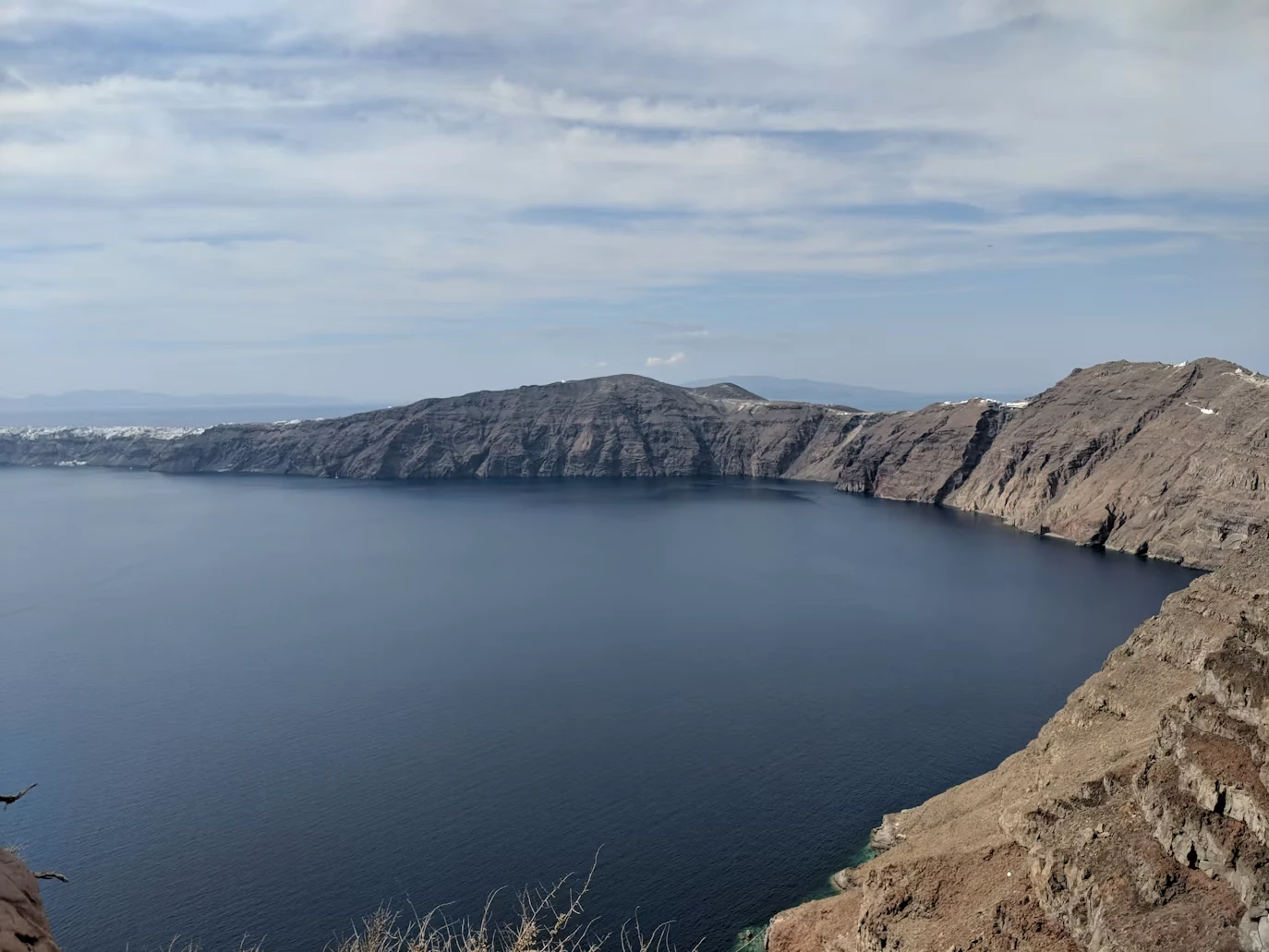
Whitewashed villages clinging to a volcanic caldera, blue-domed churches, and sunsets that draw crowds every evening of the year.
Whitewashed villages clinging to a volcanic caldera, blue-domed churches, and sunsets that draw crowds every evening of the year.
Santorini is really the rim of a collapsed volcanic caldera, and nearly everything worth seeing is built to face it — cliffside villages, infinity pools, and restaurant terraces all angled toward the same view. Fira and Oia get the postcard shots; Pyrgos and Emporio, inland and quieter, show a different, more lived-in side of the island.
It's a compact island — most sites are 20–40 minutes apart — which makes it easy to base in one village and day-trip the rest, including a boat out to the still-active volcanic islet in the caldera itself.
The island's shape comes from one of the largest volcanic eruptions in recorded history, around 1600 BCE, sometimes linked to the Atlantis myth. The excavated Minoan settlement at Akrotiri, buried in ash and remarkably preserved, offers one of the best windows into that pre-eruption world anywhere in the Aegean.
The island's shape genuinely comes from one of the largest volcanic eruptions in recorded human history, around 1600 BCE. Real evidence suggests it was powerful enough to have influenced the myth of Atlantis, though this connection remains genuinely speculative rather than established fact.
Akrotiri is genuinely sometimes called the "Minoan Pompeii," but with one real, striking difference — unlike Pompeii, no human remains have been found there, suggesting the real, genuine possibility that residents evacuated before the eruption, giving archaeologists a preserved city without a preserved tragedy.
Nearly every structure on the island is genuinely oriented toward the caldera view, not by coincidence. Cliffside villages, infinity pools, and restaurant terraces are real, deliberately angled toward the same collapsed volcanic basin that defines the island's entire geography.
Peak summer gets genuinely crowded — shoulder season keeps the views without the elbow-to-elbow sunset crowd.
Warm, blooming, noticeably quieter than July and August.
Hot, busy, and the most expensive months — reserve well ahead.
Warm sea, thinner crowds, arguably the island's best light.
Apr-Jun, Shoulder Season. Warm and blooming, this window is genuinely noticeably quieter than July and August — real, meaningful breathing room at the island's most popular viewpoints.
Jul-Aug, Peak Summer. Hot, busy, and genuinely the most expensive months — real advance booking matters more here than almost any other time of year.
Sep-Oct, Best for Sunsets. Warm sea and genuinely thinner crowds combine with arguably the island's best light — real, practical advantage over summer's crowded viewpoints for the same sunset.
Cards widely accepted; small cash useful for local tavernas and buses.
Many nationalities enter visa-free for up to 90 days within any 180-day period — verify your specific requirements before booking.
Roads are narrow and steep — a small rental vehicle offers the most freedom between villages.
An EU-wide eSIM covers Santorini reliably, including most cliffside villages.
Shoulders and knees covered is expected when visiting the island's many small chapels.
Tap water is generally safe; standard EU healthcare standards apply.
Currency & Money. Cards are genuinely widely accepted, though small cash remains useful for local tavernas and buses.
Visa. Schengen rules genuinely apply — many nationalities enter visa-free for up to 90 days within any 180-day period, worth verifying against your specific passport.
Transportation. Roads here are genuinely narrow and steep — a small rental ATV or car offers real freedom between villages that buses alone can't match.
Local Customs. Modest dress at churches genuinely reflects real Greek Orthodox tradition — shoulders and knees covered is expected at the island's many small chapels, not just the major ones.
Getting There. Ferry versus flight is a real, practical trade-off — flights are faster, while ferries genuinely offer scenic Aegean views and often connect easily with other islands if Santorini is part of a wider Greece itinerary.
Santorini is very safe — the main risks are steep, uneven steps in the cliffside villages and narrow roads. Watch your footing at night and drive cautiously on the ring roads.
Santorini is genuinely very safe. The real, main risks are steep, uneven steps in the cliffside villages and narrow roads — watching footing at night and driving cautiously on the ring roads covers the realistic risk here.
Santorini runs pricier than most Greek islands, mostly driven by caldera-view accommodation.
| Item | Budget | Mid-range | Luxury |
|---|---|---|---|
| Lodging (per night) | $60 – $120 | $180 – $400 | $500 – $1,500+ |
| Food (per day) | $25 – $40 | $50 – $80 | $100 – $200 |
| Local transport (per day) | $15 (ATV) | $30 (car) | $80+ (driver) |
| Activities | $10 – $20 | $40 – $80 | $100 – $250 |
| Ferry/flight (in/out) | $40 – $80 | $60 – $120 | $150+ |
Why Santorini genuinely runs pricier than most Greek islands. Real, physical scarcity of caldera-facing property — there's only so much rim to build on — drives accommodation costs meaningfully higher here than on islands without this specific geographic constraint.
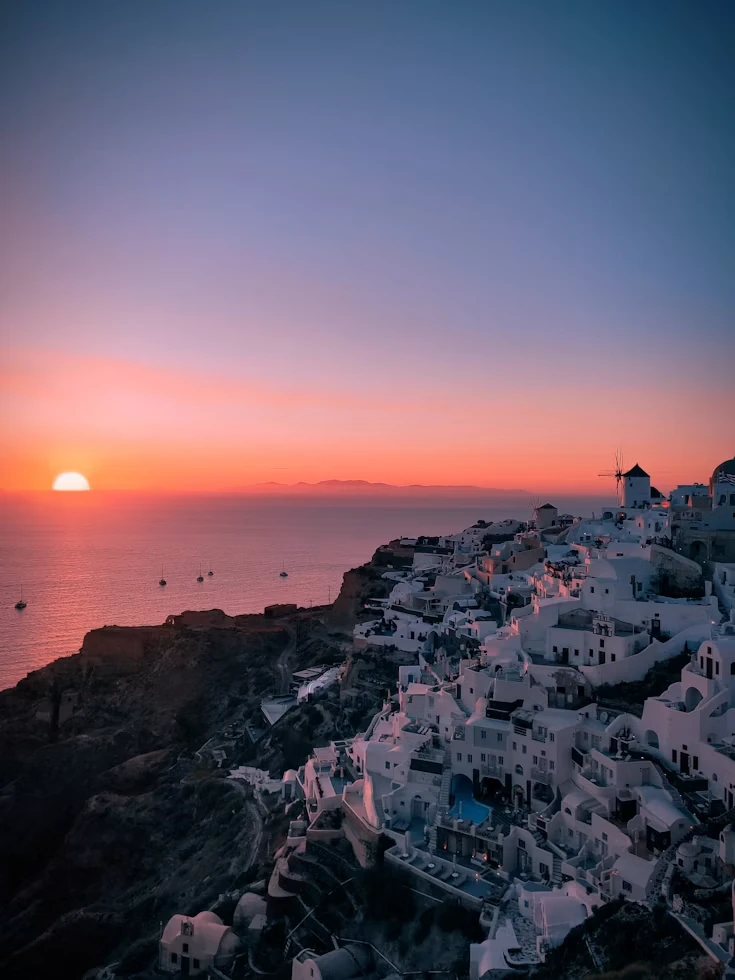
The island's most photographed view
Arrive early to claim a spot — genuinely the island's most photographed view, and it gets crowded.
Explore Experiences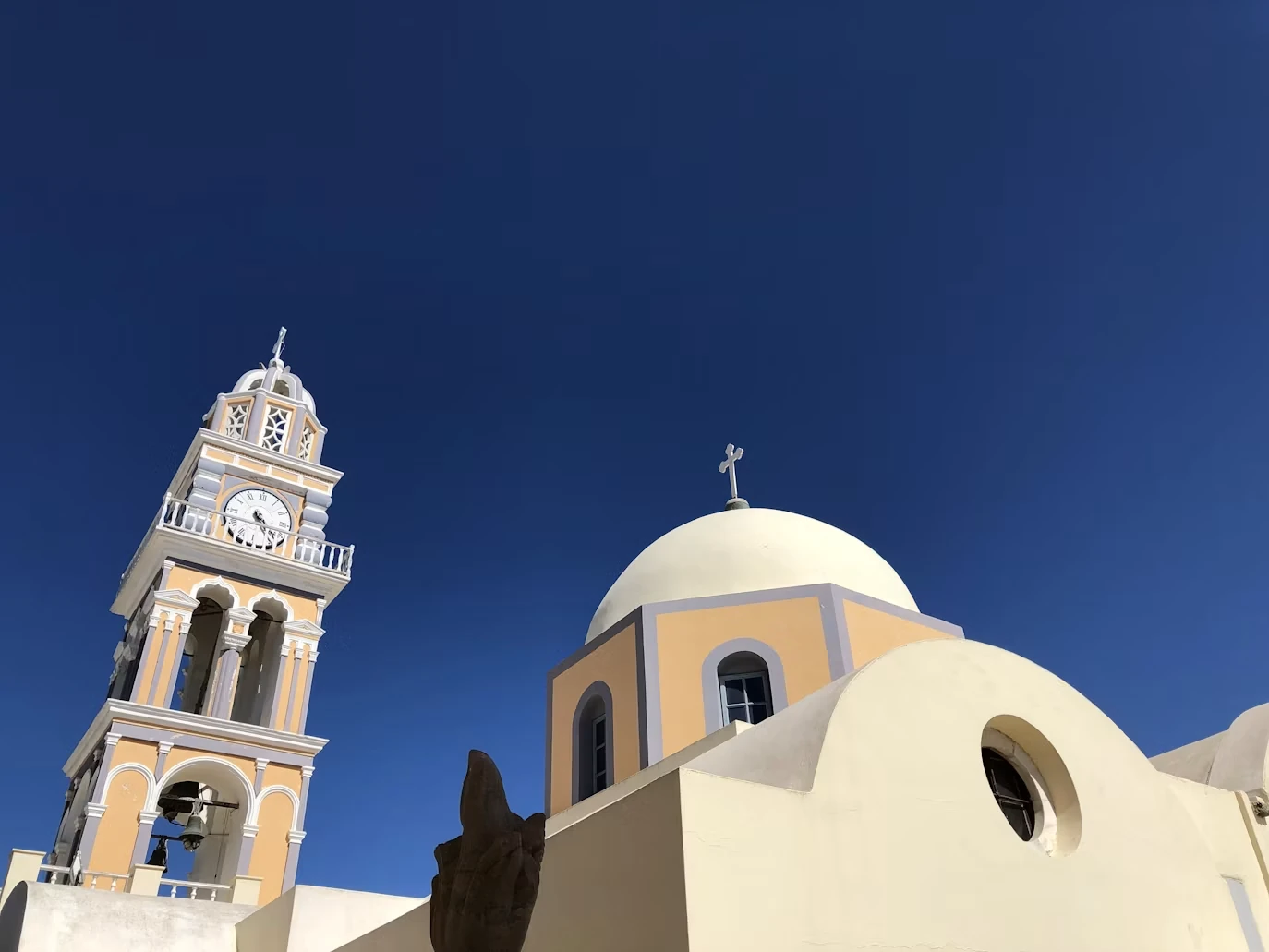
Artifacts recovered from Akrotiri
A worthwhile stop before or after visiting Akrotiri itself, genuinely adds context to the ruins.
Explore Experiences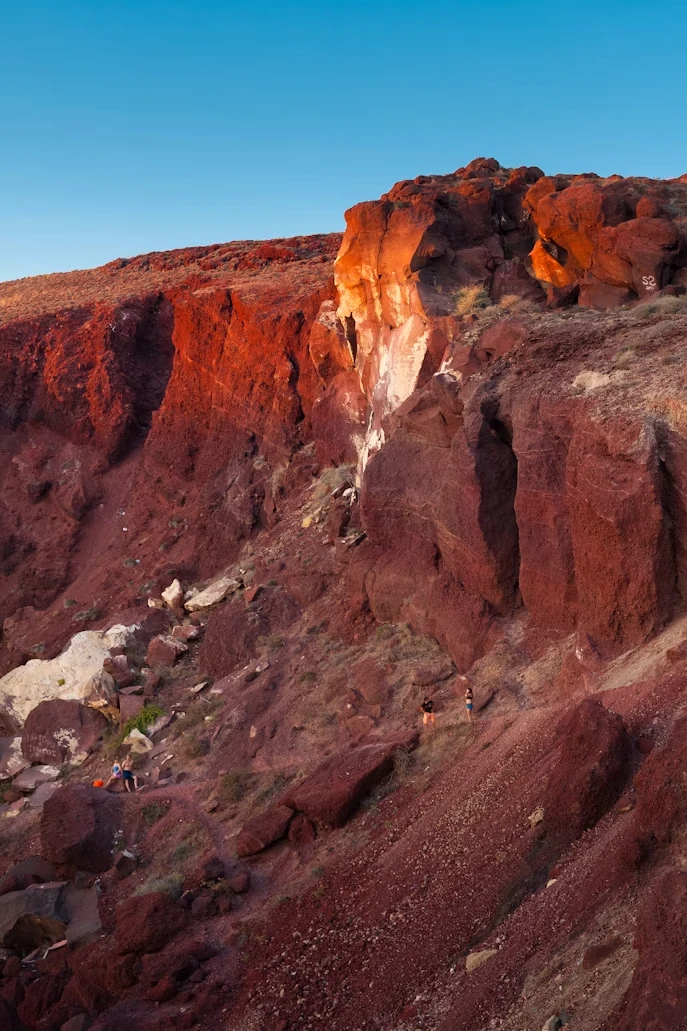
A Bronze Age city preserved under ash
A guide genuinely helps here — this Bronze Age city preserved under ash has a lot of nuance to unpack.
Explore ExperiencesOia at Sunset. Given its genuine status as the island's most photographed view, arriving early to claim a spot is a real necessity, not overcaution, during peak season.
Museum of Prehistoric Thera. Artifacts genuinely recovered from Akrotiri here add real, useful context — worth visiting before or after the ruins themselves rather than skipping either.
Akrotiri Ruins. Given the genuine preservation and evacuation mystery covered in Overview, a guide genuinely helps unpack the real archaeological nuance packed into this Bronze Age site.
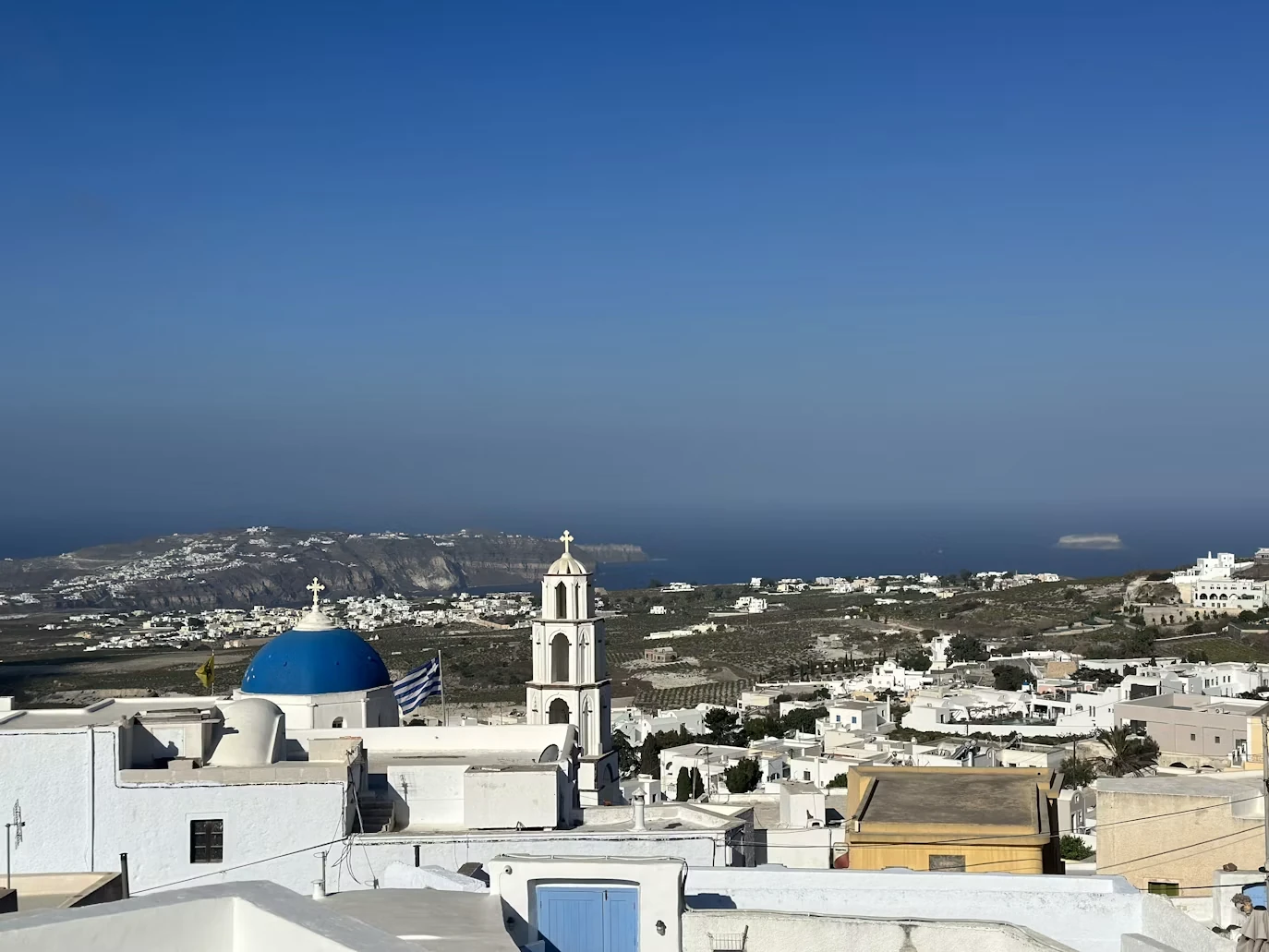
Hilltop, medieval, largely tourist-free
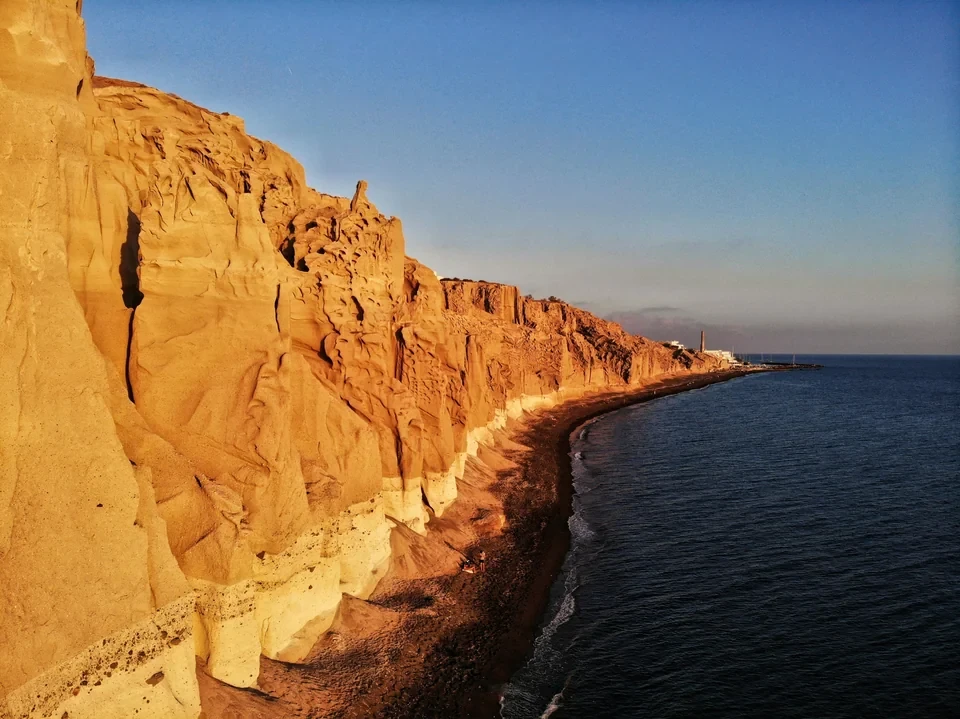
A dramatic beach most visitors skip
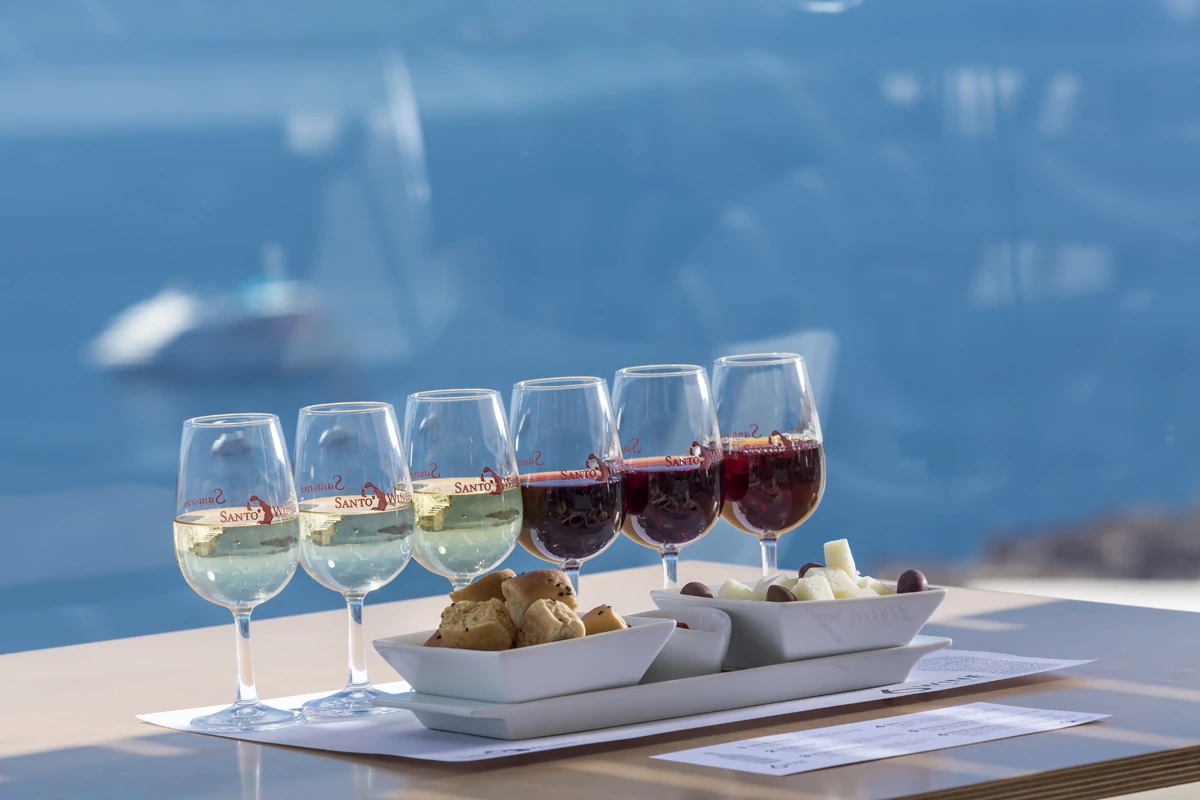
Volcanic-soil wine with caldera views
Pyrgos Village. This genuinely was the island's historic capital before Fira took over that role — a real, largely tourist-free hilltop village with genuine medieval character.
Vlychada's Red Cliffs. This genuinely dramatic, lunar-like landscape comes from real volcanic geology distinct from the island's more famous white-and-blue villages.
A Santo Wines Tasting. Santorini's genuine volcanic soil produces distinctive Assyrtiko wine, grown using a real, traditional basket-vine method called "kouloura" that protects grapes from the island's strong winds — a real, specific viticultural adaptation found almost nowhere else.

Private caldera-view plunge pool
A private caldera-view plunge pool, genuinely the classic Santorini luxury stay.
Check Availability
Central, walkable, partial caldera views
Central and walkable, genuinely offering partial caldera views without Oia's premium.
Check Availability
Inland, budget-friendly, sociable common areas
Inland and budget-friendly, genuinely sociable common areas for meeting other travelers.
Check AvailabilityOia Cave Suite Resort. Given the genuine caldera-view scarcity covered in Budget, a private plunge pool here represents the real, classic Santorini luxury stay.
Fira Boutique Hotel. Central and walkable, offering genuine partial caldera views without Oia's real premium pricing.
Karterados Hostel. Inland and budget-friendly, with genuinely sociable common areas for meeting other travelers.
Santorini's volcanic soil produces some genuinely distinctive local ingredients worth seeking out.
Fava (split-pea puree) and tomato keftedes, both Santorini specialties.
Fast, cheap, and reliably good in Fira's town center.
Higher-end spots in Oia and Imerovigli built around sunset seating.
Village Tavernas. Fava, a genuine split-pea puree, and tomato keftedes both reflect Santorini's real, distinctive volcanic-soil ingredients — the island's cherry tomatoes in particular are a genuinely well-regarded local variety.
Souvlaki & Gyro Stands. Fast, cheap, and genuinely reliably good in Fira's town center.
Caldera-View Restaurants. Higher-end spots in Oia and Imerovigli are genuinely built around sunset seating — the view is as much the draw as the menu.
Fira carries most of the island's late-night scene; Oia and smaller villages wind down early.
Steep steps and cliffside paths make strollers tricky — boat tours and beach days work for all ages.
Fira's bars, Oia's quiet. Fira genuinely carries most of the island's real late-night scene, while Oia and smaller villages wind down early — worth choosing your base accordingly if nightlife matters to your trip.
Better for older kids. Given the genuine steep steps and cliffside paths covered in Safety, strollers are genuinely impractical — boat tours and beach days work well for all ages instead.
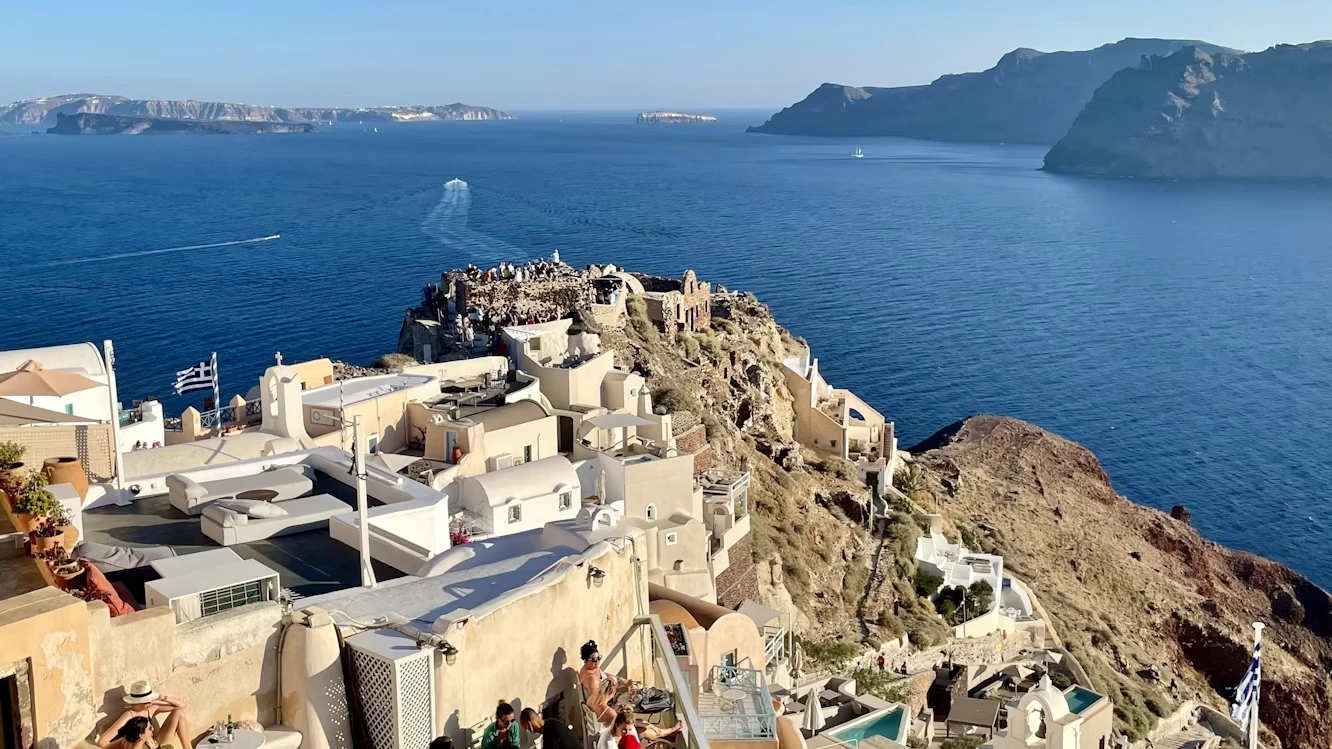
Arrive early for a spot
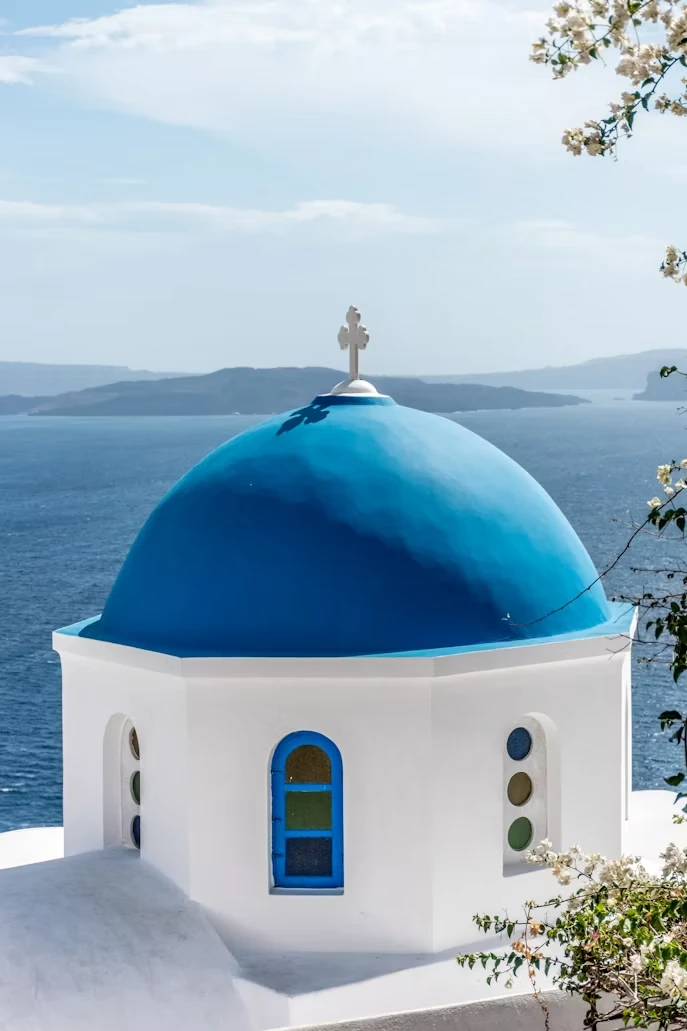
The most photographed rooftops on the island
A quieter caldera view than Oia
Oia Castle Ruins. Given the genuine sunset crowds covered in Attractions, arriving early here secures a real, unobstructed spot.
Blue-Domed Churches, Fira. These are genuinely the most photographed rooftops on the island — worth knowing the specific vivid blue is a real, relatively modern aesthetic choice layered onto older Greek Orthodox church tradition, not an ancient color scheme.
Skaros Rock, Imerovigli. This offers a genuinely quieter caldera view than Oia, with real, comparable drama and far fewer crowds.
Comfortable walking shoes. Given genuine steps and cobblestones covered in Safety, real footwear support matters throughout the island.
Sandals for beach days. Santorini's genuine volcanic beaches, including the black sand common here, can get real hot underfoot.
Light layers. Given genuine breezy evenings even in warm months, a light layer handles the real temperature drop after sunset.
A modest cover-up for churches. Given genuine Orthodox dress expectations covered in Practical Information, this avoids scrambling at chapel entrances.
Reef-safe sunscreen. Genuinely worth using given the island's real surrounding marine ecosystem.
Power adapter (EU plug). Standard for Greece, worth confirming if traveling from outside the EU.
3–4 days covers the island well — it's small enough that longer stays are more about pace than needing more to see.
Yes — Santorini is one of the easier Greek islands for solo travel, with a well-developed tourist infrastructure and low crime.
For caldera-view rooms in July–August, yes — 4–6 months ahead isn't unusual. Shoulder season is far more flexible.
Comfortable shoes for steps and cobblestones, a light layer for breezy evenings, and swimwear even in villages without a nearby beach.
How many days do I actually need? 3-4 days genuinely covers the island well — it's small enough that longer stays are more about real pace than needing more to see.
Is it safe for solo travelers? Yes — Santorini is genuinely one of the easier Greek islands for solo travel, with real, well-developed tourist infrastructure and low crime.
Do I need to book far in advance? For caldera-view rooms in July-August, yes — genuinely 4-6 months ahead isn't unusual, covered in Budget. Shoulder season is far more flexible.
What should I pack? The reasoning behind each item — including why real footwear support matters more here than on flatter Greek islands — is covered in the Packing section above.
Get the complete Santorini guide as a beautifully designed, offline-ready PDF — every section organized for actual use in the field, plus a full packing checklist.
Turn your research into a trip designed around your actual dates, budget, and travel style — planned by a person, not a form.
EXPLORE GOATLAS CONSULTATIONSGenuinely recommended places to stay and eat, not filler — booked through our trusted travel partners.
Book hotels, flights, tours, airport transfers, travel insurance, and car rentals through GoAtlas's trusted global travel partners — all in one place.
Explore Trusted Travel PartnersA GoAtlas travel expert can build your full Santorini itinerary around your dates and budget.