East Africa · Safari
The Serengeti, Tanzania
2.3333° S, 34.8333° E
Endless golden plains, the Great Migration, and skies that don't end at the horizon — the safari every other safari is measured against.
Endless golden plains, the Great Migration, and skies that don't end at the horizon — the safari every other safari is measured against.
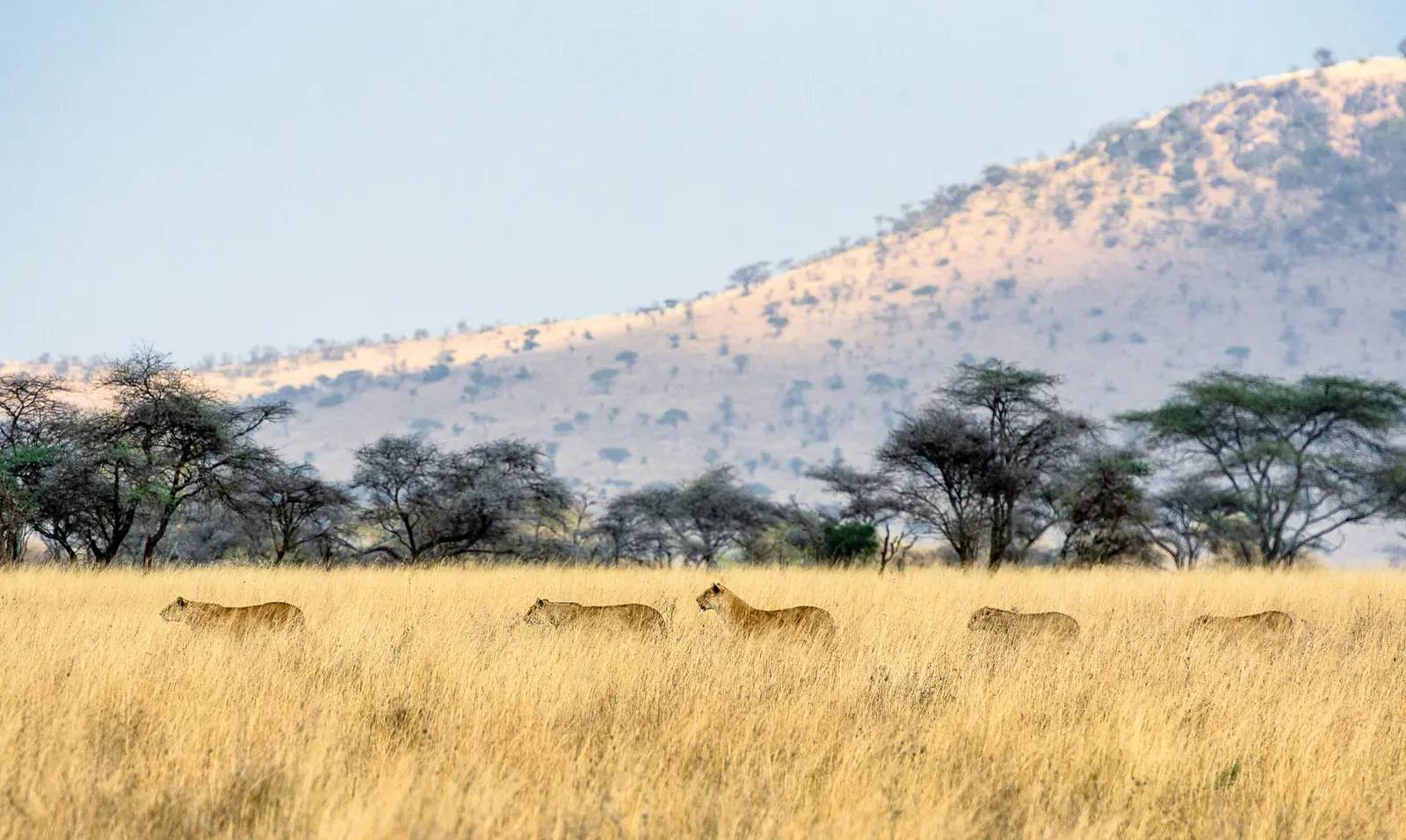
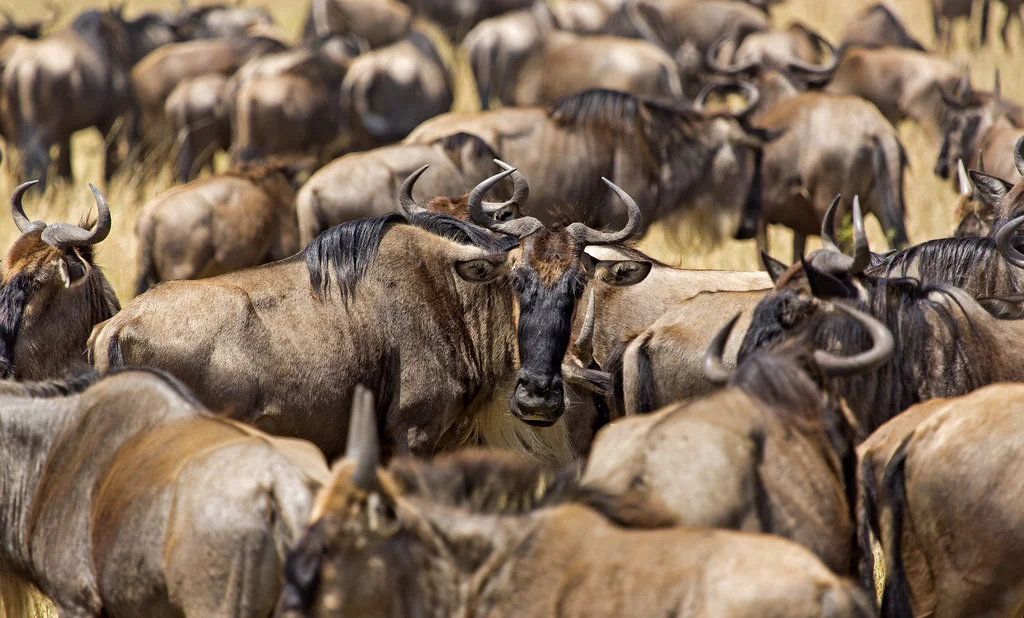
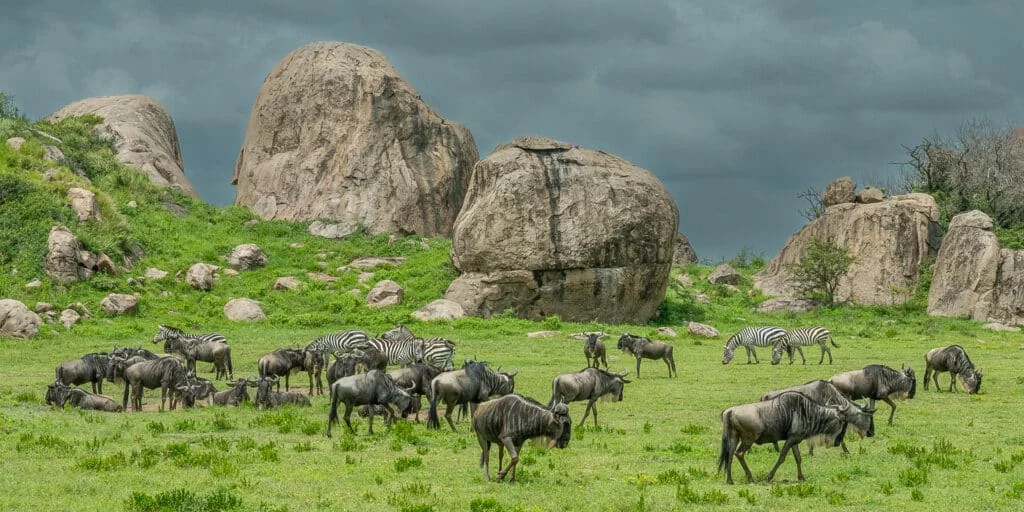
The Serengeti isn't a single place so much as a moving one — over two million wildebeest, zebra, and gazelle cross its plains each year in an unbroken migratory loop, trailed by the predators that follow them. The park spans nearly 15,000 square kilometers of grassland, woodland, and river systems.
Most visits are built around a lodge or mobile camp, with early-morning and late-afternoon game drives timed to when wildlife is most active.
The land has been home to the Maasai for centuries, and their pastoral relationship with the plains predates the park's formal protection in 1951. Many camps now work directly with Maasai communities on conservation and guiding.
The migration's scale is genuinely one of the largest terrestrial wildlife movements on Earth. Over two million wildebeest, zebra, and gazelle move in an unbroken annual loop, following rainfall rather than any fixed calendar — this is why "best time to see the migration" is really a question about where the herds currently are, not a single fixed season.
The park's 1951 formal establishment came after centuries of existing Maasai pastoral life on these plains. That history matters practically today — many camps now operate in direct partnership with Maasai communities on both conservation work and guiding, a real, ongoing relationship rather than a historical footnote.
The park's nearly 15,000 square kilometers means no single camp location sees the whole ecosystem. This is genuinely why multi-camp itineraries exist — the migration's location relative to your camp changes the entire character of a visit, not just the scenery around it.
The calendar here is really the migration's calendar.
Peak visibility, herds concentrated near water — also the busiest window.
Green season begins, crowds thin, migration moves south.
Over 8,000 wildebeest born daily on the southern plains.
Jun–Oct, Dry Season. Herds concentrate visibly near remaining water sources during this window, genuinely improving visibility — this reliability, not just marketing, is why it's also the busiest and most expensive season to visit.
Nov–Dec, Short Rains. The migration moves south as fresh grass grows behind the rain, and genuinely fewer visitors travel this window despite comparable wildlife activity — a real trade-off between slightly less predictable game drives and noticeably lower prices and crowds.
Jan–Mar, Calving Season. Over 8,000 wildebeest are born daily on the southern plains specifically because of the region's nutrient-rich volcanic soil, deposited by ancient Ngorongoro eruptions — this genuinely nutritious grass is why the herds return to calve in this exact area year after year, not habit alone.
Why migration timing genuinely shifts year to year: the herds follow rainfall patterns that vary annually, meaning even experienced guides describe river crossing timing as a probability, not a guarantee — a camp's location relative to the CURRENT herd position matters more than the calendar month alone.
USD cash widely accepted at lodges; carry small, newer bills.
Apply online in advance; a yellow fever certificate may be required depending on your route.
Most fly into Arusha, then connect via light aircraft or road transfer.
Most camps offer evening Wi-Fi only in common areas.
Especially in Maasai communities.
Consult a travel clinic 4–6 weeks before departure.
Currency & Money. USD cash is genuinely the practical currency inside the park itself — lodges and park fees widely accept it directly, though older or damaged bills face the same rejection risk common across East Africa.
Visa. Whether a yellow fever certificate is required depends specifically on your prior travel history and route, not blanket nationality rules — worth checking against your specific itinerary well before departure.
Getting Around. Light aircraft transfers between camps are genuinely common, not an upsell — the park's scale means road transfers between distant camps can consume most of a travel day, while a short charter flight covers the same distance in a fraction of the time, preserving actual game-drive time.
Internet. Camps offering only evening common-area Wi-Fi isn't a service gap — it reflects the park's genuine remoteness and a deliberate choice by many camps to keep the safari experience unplugged during the day.
Local Customs. Asking before photographing people matters most in Maasai communities specifically, where photography has become tied to a small-tip economy — a respectful ask first is the pattern most visitors find works well.
Health. Malaria risk is genuine across the Serengeti, making a travel clinic consultation 4-6 weeks ahead a real, worthwhile step rather than a formality.
The Serengeti is a well-run, professionally guided environment — the real risk isn't crime, it's underestimating wildlife. Stay in the vehicle during drives unless told otherwise.
Underestimating wildlife is genuinely the real risk here, not crime. Staying inside the vehicle during game drives unless a guide explicitly says otherwise isn't overcaution — vehicles are generally perceived by wildlife as a single, non-threatening shape, a perception that breaks down the moment someone exits, genuinely changing how animals respond.
The Serengeti is a professionally guided, well-run environment — guides carry real, current knowledge of animal movement and behavior that functions as the actual safety system here, more than any list of rules could on its own.
Safari pricing swings more than almost any other trip type.
| Item | Budget | Mid-range | Luxury |
|---|---|---|---|
| Lodging (per night) | $80 – $150 | $250 – $500 | $700 – $1,800+ |
| Park & conservation fees | $60/day | $60/day | $60/day |
| Game drives | Shared vehicle | Small group | Private guide |
| Meals | Included | Included | Included, à la carte |
| Internal flights | $150 – $250 | $150 – $250 | $150 – $350 |
Why the $60/day park fee stays flat across every budget tier. This is a fixed conservation charge set by park authorities, not a lodge markup — it funds anti-poaching and habitat management regardless of whether you're staying at a public campsite or a luxury tented camp, the same structural logic behind Uganda's gorilla permit pricing.
Migration season genuinely commands premium pricing beyond just demand. Camps positioned near the current herd location during peak crossing windows are limited in number, and that specific positioning — not just calendar timing — is what visitors are actually paying more for during July-September.
River crossings at the Mara & Grumeti
Crossing timing shifts year to year, so a guide with current knowledge of herd movement genuinely matters here.
Explore Experiences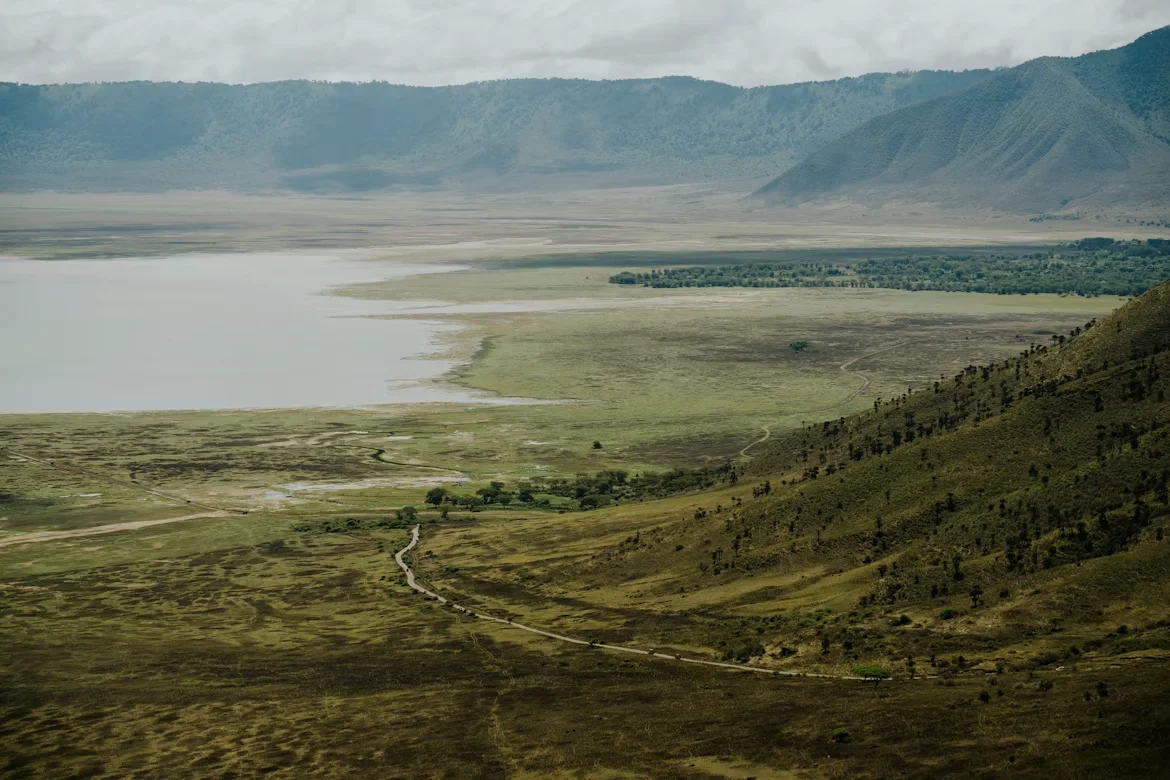
The world's largest inactive volcanic caldera
Access is only by guided vehicle — the crater floor itself is a protected conservation area.
Explore Experiences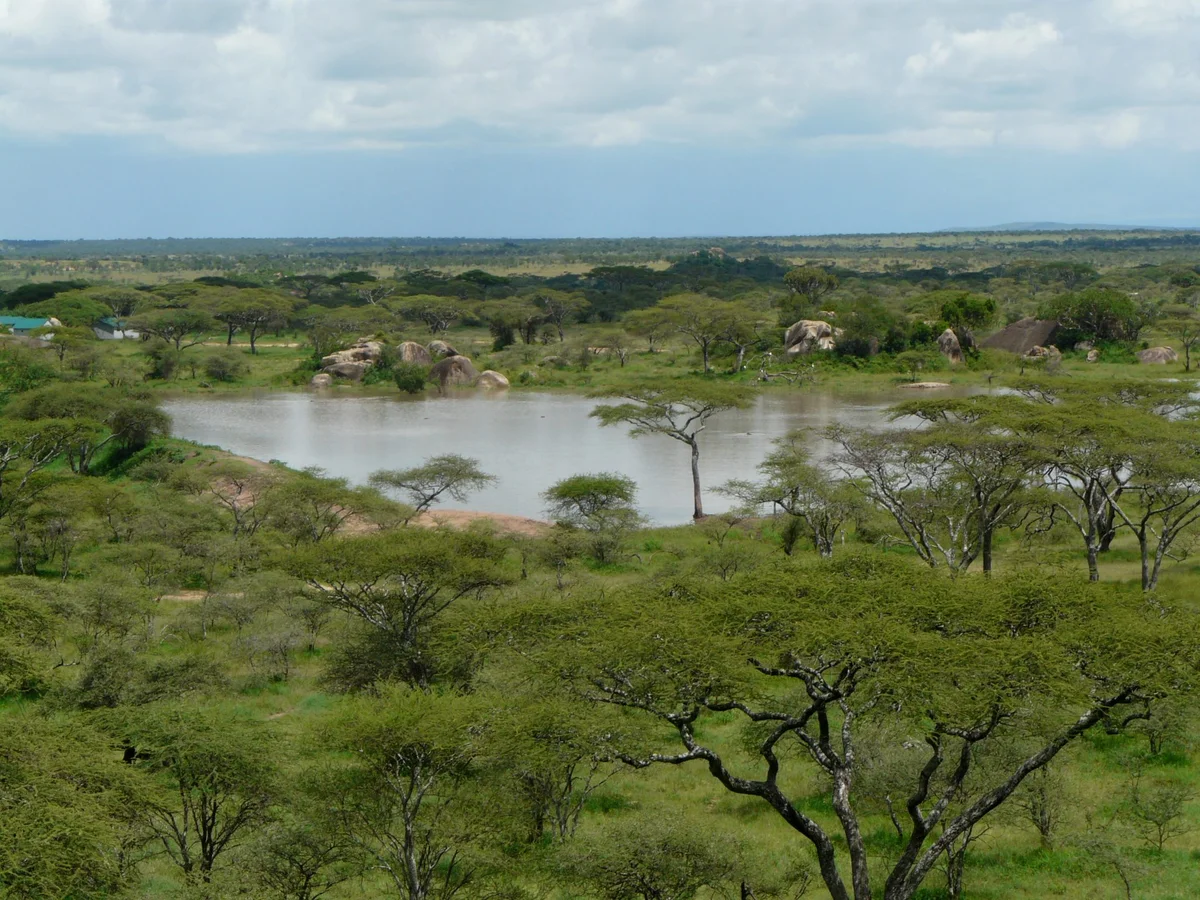
Year-round wildlife density, the park's heart
Game drives here are reliable enough that even a short guided visit tends to deliver genuine sightings.
Explore ExperiencesThe Great Migration. River crossings at the Mara and Grumeti are genuinely unpredictable in exact timing — herds can stage at a riverbank for days before committing to cross, which is why a guide with current, on-the-ground knowledge of herd position matters more here than almost anywhere else in East African safari planning.
Ngorongoro Crater. Sharing this attraction with the wider Tanzania region, the crater's genuinely exceptional wildlife density comes from its steep walls creating an unusually closed ecosystem — many resident animals don't migrate the way the open Serengeti's herds do.
Seronera Valley. This area's year-round wildlife reliability, unlike the migration's seasonal movement, comes from genuine permanent water sources and river systems that sustain resident predator and prey populations regardless of season — the park's most consistent wildlife viewing precisely because it doesn't depend on migration timing at all.
Northern Serengeti, a fraction of the crowds
Ancient rock formations & Maasai rock art
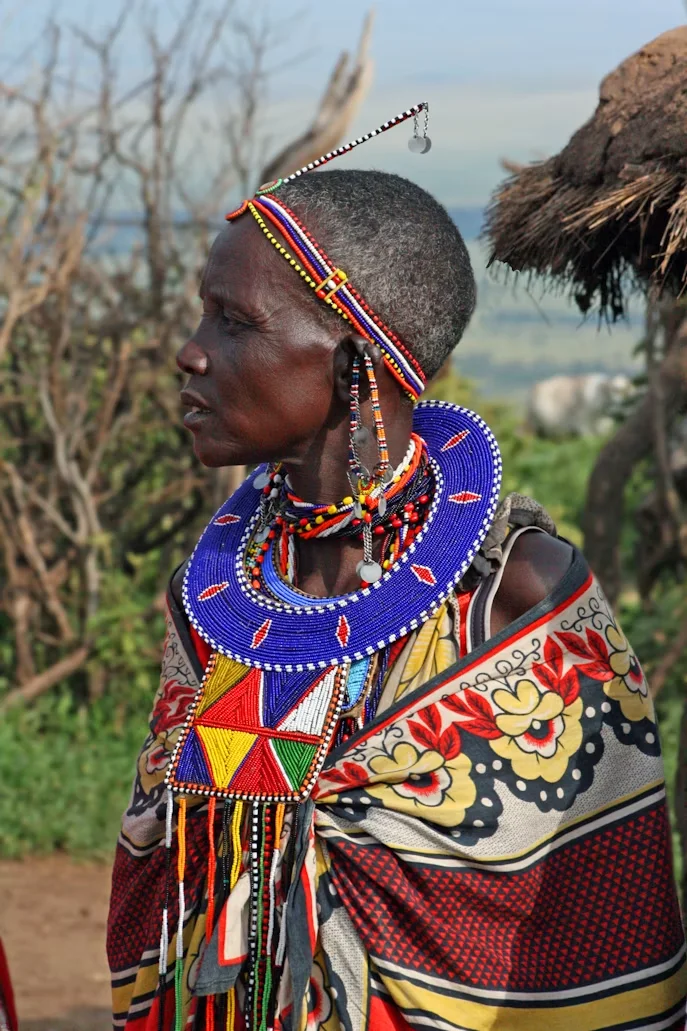
Arranged through select community-run camps
Lamai Wedge. This northern Serengeti area genuinely sees a fraction of the vehicle traffic of the central park, largely due to its remoteness and the extra transfer time required to reach it — a real trade-off between accessibility and the kind of uncrowded sightings that draw repeat safari travelers specifically to this region.
Moru Kopjes. These ancient granite rock formations carry genuine historical weight beyond scenery — Maasai rock art found here provides real evidence of human presence on these plains stretching back generations before the park's formal protection began.
A Maasai Boma Visit. Arranged specifically through community-run camps, this is a genuine cultural exchange rather than a staged performance — the distinction matters, and choosing a camp with real, direct Maasai community partnership (rather than a generic add-on tour) is what makes the visit substantive.

Private verandas overlooking the plains
Private verandas overlooking open plains put the wildlife right outside your tent, not just on a drive.
Check Availability
Solid comfort, prime wildlife-viewing location
Solid lodge comfort in the park's most reliable year-round wildlife-viewing area.
Check Availability
Bring your own gear, guided cook option available
A genuinely more affordable way to sleep inside the park itself, with a guided cook option if you'd rather not self-cater.
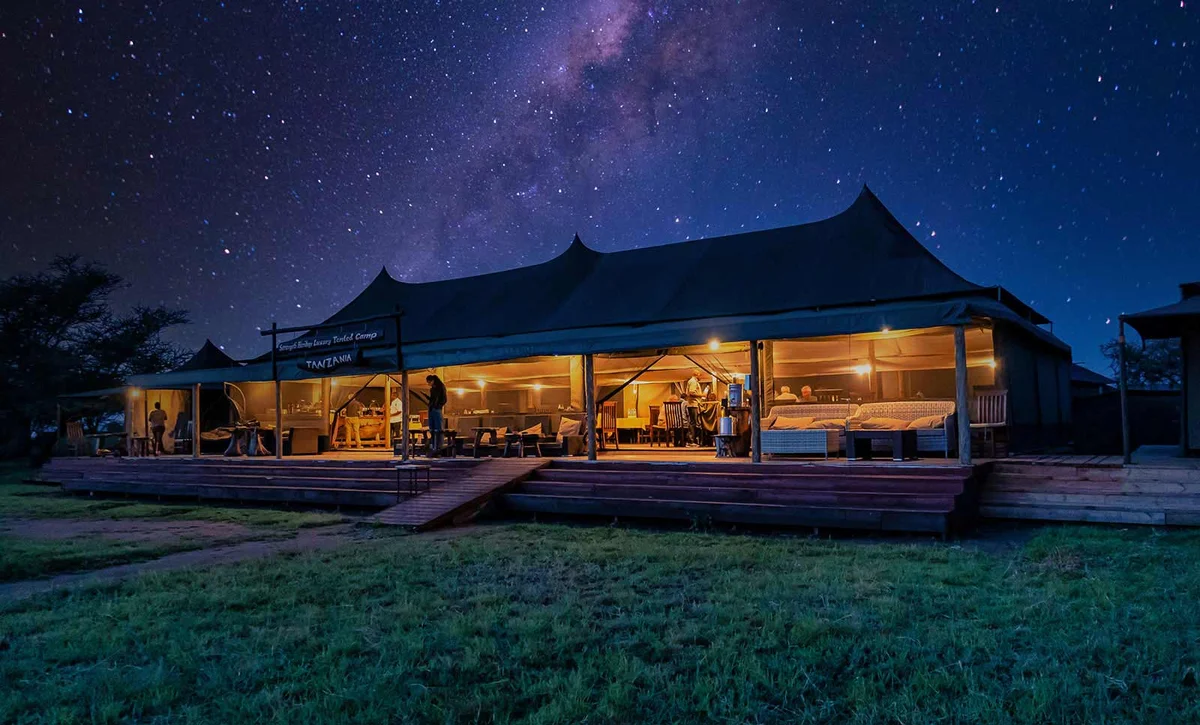
Check AvailabilityCentral Serengeti Tented Camp. A private veranda overlooking open plains genuinely puts wildlife activity within view of camp itself, not just during scheduled drives — a real, different register of immersion than a lodge set back from the landscape.
Seronera Valley Lodge. Positioning matters as much as comfort here — Seronera's genuine year-round wildlife density, covered in Attractions, means a lodge based here delivers reliable sightings regardless of migration timing elsewhere in the park.
Public Campsite, Central Serengeti. This is a genuinely different, more affordable way to experience being inside the park overnight — hearing the actual sounds of the Serengeti at night from a public site is a real, distinct experience from a private luxury camp, at a fraction of the cost.
Most meals happen at your camp — dining here is about the setting as much as the menu.
A full spread set up at a scenic viewpoint mid-drive.
A set multi-course dinner shared with fellow guests.
Nyama choma and pilau, worth an evening before you fly out.
Bush Breakfast. This tradition exists for a genuine, practical reason, not just novelty — leaving camp before sunrise for peak wildlife activity, then stopping for a proper hot breakfast once the light gets harsh and animals grow less active, fits the actual rhythm of a real game drive day.
Communal Dinner Tables. Most camps are genuinely remote enough that a shared, set multi-course dinner is the practical norm — it also creates a natural social setting among guests who spent the same day on drives together, often swapping sightings over the meal.
Local Swahili Cuisine. Arusha, the real gateway city most safaris fly through, offers a genuine taste of mainland Tanzanian food — nyama choma and pilau specifically — worth a stop before or after the park itself, since camp dining rarely features this style of cooking.
Evenings center on a campfire and stargazing — this isn't a late-night destination.
Look for family-style tents and junior ranger programs.
Fireside, not nightclubs. This isn't a limitation so much as the genuine point of a Serengeti evening — campfire conversation and stargazing under some of the least light-polluted skies most visitors will ever experience, a real, different kind of evening than any city nightlife.
Most camps welcome kids 6+. This age guidance reflects real, practical factors — game drive length and the genuine need for children to sit calmly for extended periods near wildlife — rather than an arbitrary cutoff, and junior ranger programs at family-oriented camps are a genuine, purpose-built alternative to standard drives.
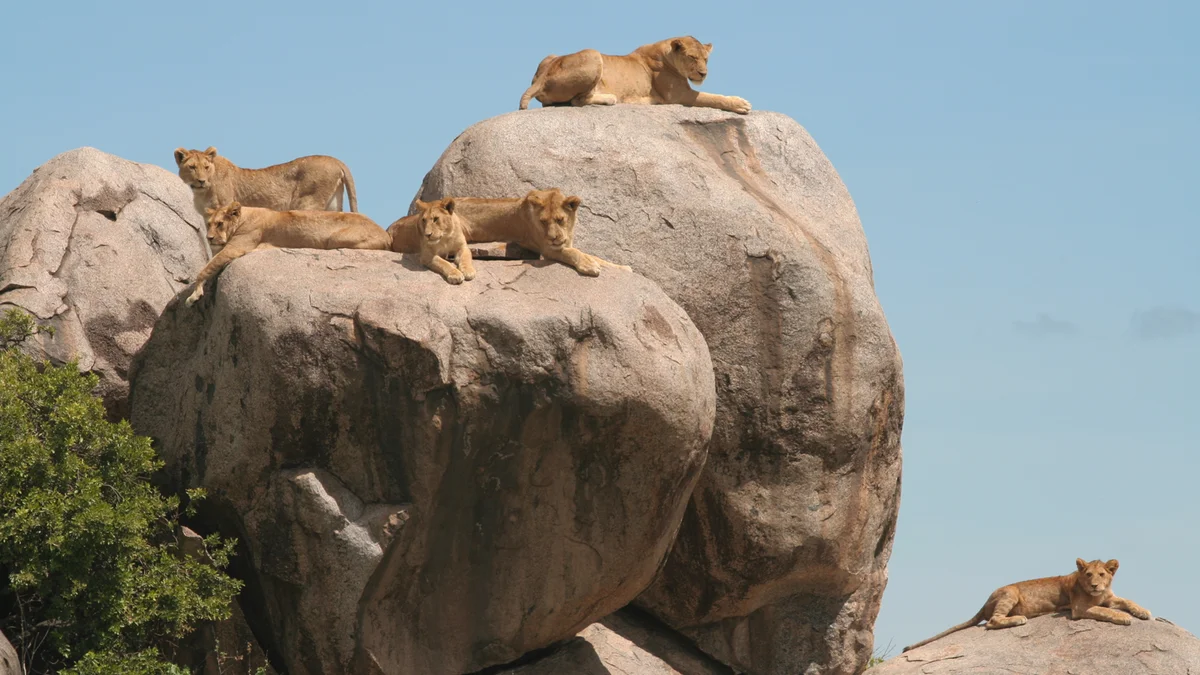
Lions on the rocks, first light
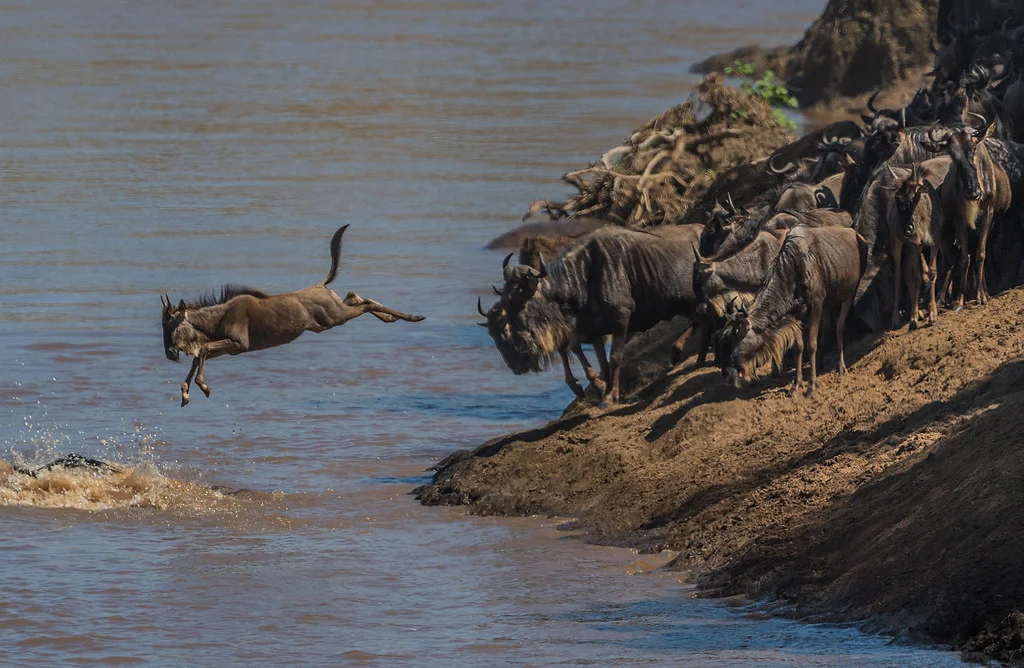
The Serengeti's most photographed moment
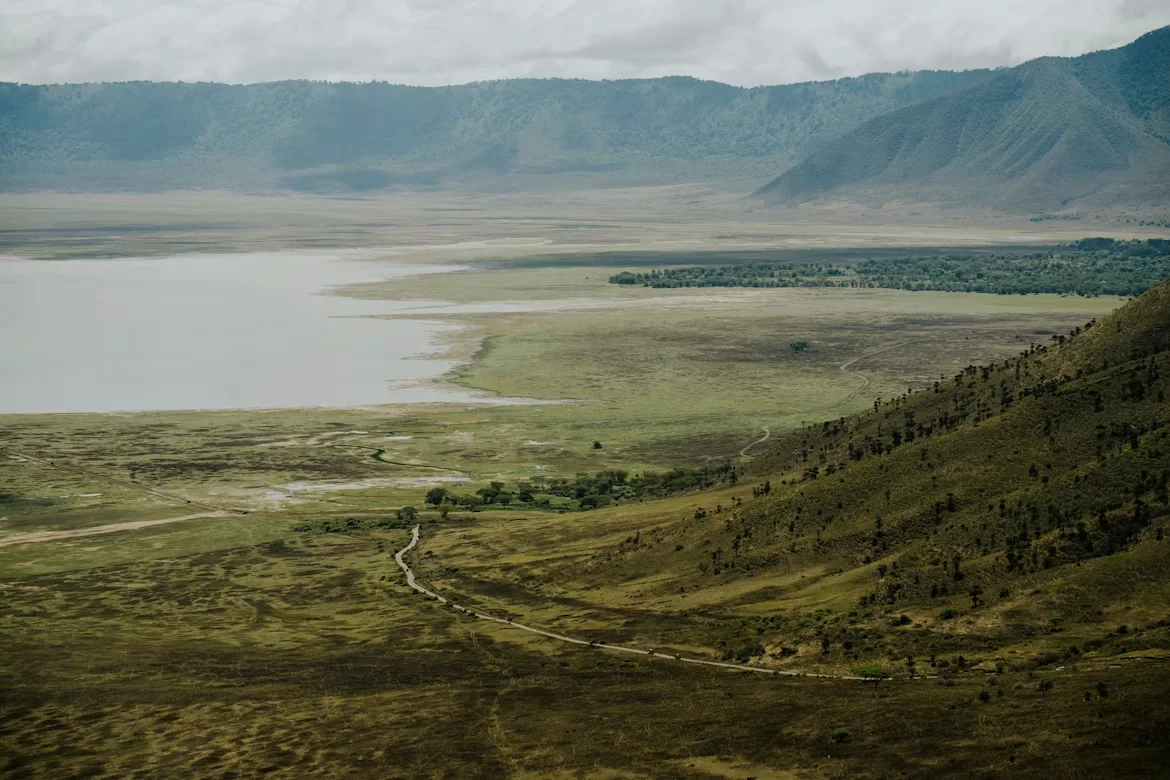
The whole crater floor in one frame
Seronera Kopjes. Lions genuinely favor these rock formations for real reasons beyond photogenic value — the elevated vantage point helps spot prey across the surrounding plains, and the rocks retain warmth after cool nights, making early morning light here a reliable combination of good light and real wildlife behavior.
Mara River Crossings. As noted in Attractions, timing is genuinely unpredictable — herds can wait at the riverbank for hours or days, meaning capturing this shot often requires real patience and a guide's current knowledge more than technical camera skill.
Ngorongoro Rim. Fitting the entire crater floor into one frame requires a wide-angle lens and benefits from the clearer light of early morning, before haze typically builds up over the course of the day.
Closed-toe walking shoes. Genuinely useful beyond vehicle-based drives — walking safaris and bush breakfast stops involve real uneven ground that open footwear doesn't handle well.
Neutral-colored clothing. As with other East African safaris, muted tones genuinely help avoid standing out against the landscape and reduce insect attraction compared to darker colors.
Layers for cold mornings. Game drives typically start before sunrise, when temperatures can drop surprisingly low even in a hot climate — a layer that gets shed by mid-morning is the standard, expected pattern.
Binoculars. Genuine distances between vehicle and wildlife on the open plains make a decent pair of binoculars change what you actually see far more than camera zoom alone.
Antimalarials if advised. Worth a real conversation with a travel clinic about your specific route and dates, given genuine malaria risk across the region.
A wide-brim hat & power bank. The Serengeti's open plains offer genuinely little natural shade during midday game drives, and full-day drives with no return to camp routinely outlast phone and camera battery life — both are practical necessities, not just comfort items.
4–5 nights is the sweet spot — enough to shift camps once and see genuinely different terrain.
Yes — nearly all safaris are guided, and many camps run scheduled shared game drives.
For peak river-crossing season (Jul–Sep), yes — the best camps book out 9–12 months ahead.
Neutral-colored clothing, layers, a wide-brim hat, and binoculars. Most camps offer complimentary laundry.
How many days do I actually need? The 4-5 night figure genuinely allows shifting camps once, seeing meaningfully different terrain and wildlife concentrations rather than experiencing just one small slice of a nearly 15,000 square kilometer park.
Is it safe for solo travelers? Yes — nearly all Serengeti safaris are guided by design, and many camps run scheduled shared game drives, making this a genuinely well-supported destination for solo travelers rather than one requiring extra planning.
Do I need to book the migration months in advance? For peak river-crossing season specifically, yes — the best-positioned camps for that exact window genuinely book out 9-12 months ahead, given how few camps sit close enough to the likely crossing points.
What should I pack? The reasoning behind each item — including why a wide-brim hat and power bank are genuine necessities here, not just nice-to-haves — is covered in the Packing section above.
Get the complete The Serengeti guide as a beautifully designed, offline-ready PDF — every section organized for actual use in the field, plus a full packing checklist.
Turn your research into a trip designed around your actual dates, budget, and travel style — planned by a person, not a form.
EXPLORE GOATLAS CONSULTATIONSGenuinely recommended places to stay and eat, not filler — booked through our trusted travel partners.
Book hotels, flights, tours, airport transfers, travel insurance, and car rentals through GoAtlas's trusted global travel partners — all in one place.
Explore Trusted Travel PartnersA GoAtlas travel expert can build your full Serengeti itinerary around your dates and budget.