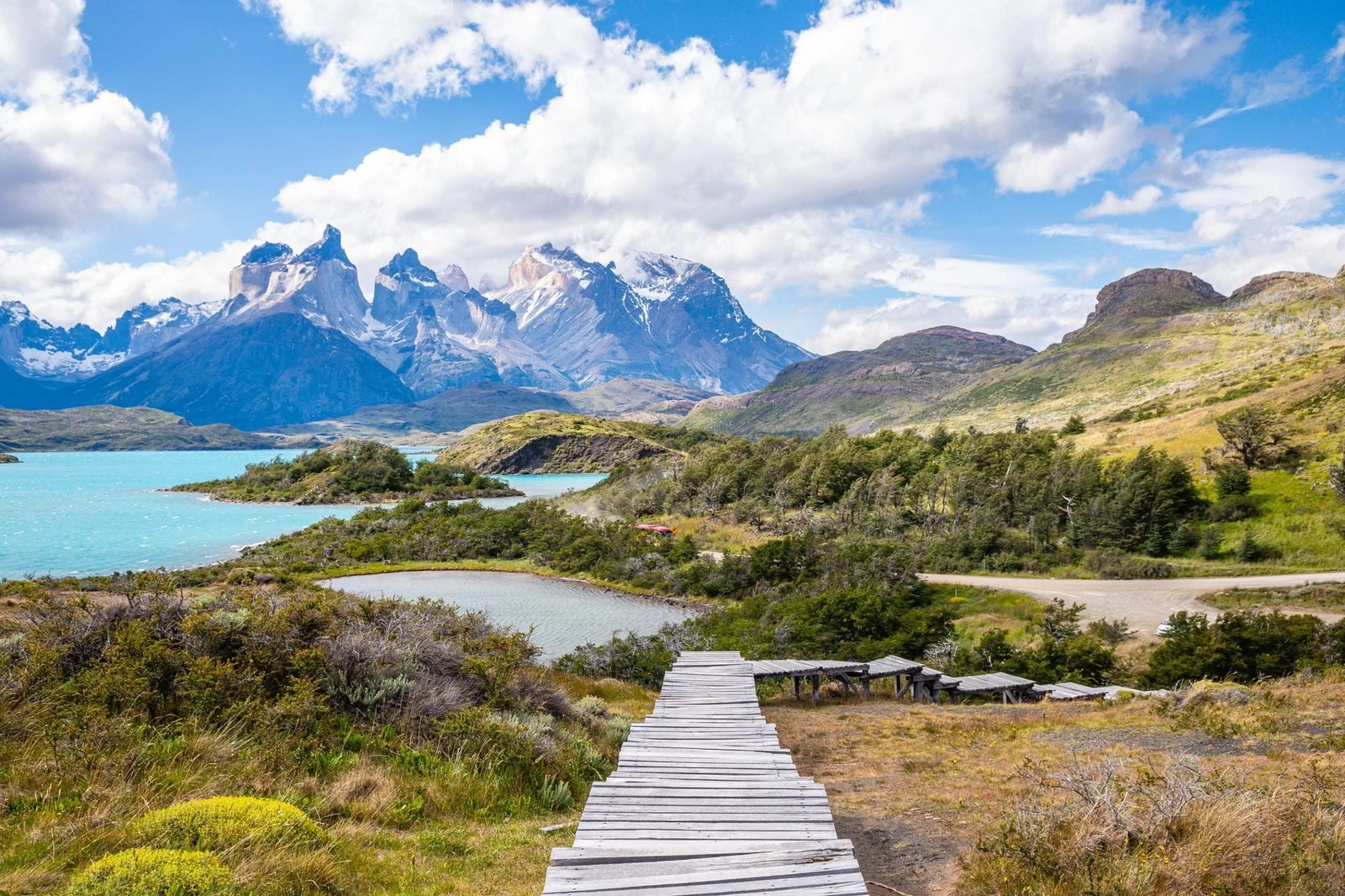
The W Circuit gets its name from the shape it traces on a map — four to five days covering roughly 70 kilometers through Torres del Paine National Park, hitting three major valleys. It's genuinely one of the most rewarding treks in South America, and also one where realistic expectations matter more than almost anywhere else.
The weather does not care about your itinerary
Patagonia's weather is famous for changing entirely within the same hour — bright sun, then horizontal wind and rain, then clear again, often all before lunch. Every day's trek should be planned with the assumption that conditions will shift, not as an exception. Waterproof everything, not just your jacket — pack covers for your bag, dry bags for electronics, the works.
"We had all four seasons in a single afternoon on the trail to the base of the towers — sun, hail, wind that nearly knocked us over, then a clear sky by the time we arrived."
Book refugios and campsites well ahead, not on arrival
Unlike a lot of treks where you can improvise accommodation day to day, the W Circuit's refugios and campsites inside the park have limited capacity and require advance booking, often months ahead during peak season. Showing up without reservations risks not being allowed to complete sections of the trek at all — this is genuinely the most important piece of planning to get right before you go.
The base of the towers is the hardest day, and it's worth it
The final push to the viewpoint beneath the granite towers is steep, exposed, and physically the toughest single stretch of the whole circuit — a scramble over loose rock for the last section. It's also, by a wide margin, the payoff most people remember afterward. Start early enough to have buffer time, since weather at the viewpoint itself is even more unpredictable than lower down.
Fitness matters more than technical skill
The W Circuit doesn't require technical climbing experience, but it does require genuine cardiovascular fitness and comfort carrying a loaded pack over consecutive long days. Multi-day training hikes beforehand, ideally with the actual pack weight you'll carry, make a real difference to how much you enjoy days three and four versus how much you're just enduring them.
Layer for wind, not just cold
Patagonia's wind is a genuine physical force, not a minor inconvenience — gusts strong enough to affect your balance are common. A proper windproof outer layer matters more here than raw warmth; you'll often be working hard enough on the trail to stay warm, but wind cuts through inadequate gear regardless of temperature.
For full logistics on getting to the park and choosing a base town, see our Patagonia destination guide.



Want your refugio bookings and logistics handled properly? The GoAtlas team can help you avoid the booking scramble.
Speak with the GoAtlas Team