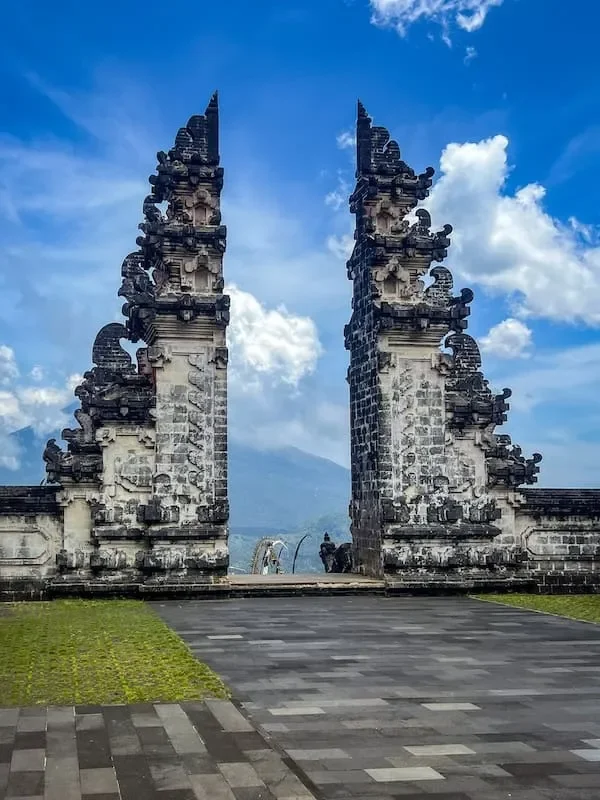
Every temple in Bali has an odalan — an anniversary ceremony marking the temple's founding, held once every 210 days on the Balinese pawukon calendar. With thousands of temples on the island, it means there's almost always one happening somewhere, and travelers who stay more than a few days often stumble across one without planning to.
Getting invited, or not needing to be
Balinese temple ceremonies aren't private events closed to outsiders — visitors are generally welcome, provided they're dressed and behaved appropriately. That said, "welcome" means guest, not participant. The difference matters, and it's the whole point of this piece.
What to wear, actually
- A sarong, wrapped around the waist, covering the legs — many temples have them available to borrow or rent at the entrance if you don't have your own.
- A sash (selendang) tied at the waist over the sarong.
- Shoulders covered. This isn't optional even in Bali's heat.
Turning up underdressed is the single most common way visitors accidentally disrespect a ceremony they were otherwise welcome to attend.
"Nobody will stop you at the gate for wearing the wrong thing. They'll just quietly know you didn't think about it."
What actually happens
Families arrive carrying canang sari — small offerings of flowers, rice, and incense woven from palm leaf — stacked in tiered baskets, often balanced on the head. Gamelan orchestras play in shifts for hours. Priests move through blessing rituals in a sequence that can look, to an outsider, more like a long, unhurried gathering than a single defined "event" — because it is one. Odalan ceremonies often run for days, with the most significant rituals concentrated on specific hours rather than the whole thing being a single performance to watch start to finish.
The etiquette that actually matters
- Never position yourself higher than a priest during prayer — physically standing above them is considered deeply disrespectful.
- Don't photograph people during active prayer without asking first, even if it seems like a natural moment for a photo.
- Don't step over offerings placed on the ground — walk around them.
- If in doubt about where you can stand, watch where other guests (not participants) are positioned, and stay there.
What it's actually like
Less a spectacle than a genuinely long, communal, unhurried afternoon that happens to include extraordinary music and color. The instinct to treat it like a show to be watched from the best angle is worth resisting — the ceremonies that felt most memorable were the ones spent sitting quietly at the edge, not maneuvering for a better view.
For the rest of Bali — where to stay, what else to see, and how ceremonies fit into a wider trip — see our Bali destination guide.



Want a Bali trip planned around cultural moments like this, not just the beaches? The GoAtlas team can help time it right.
Speak with the GoAtlas Team