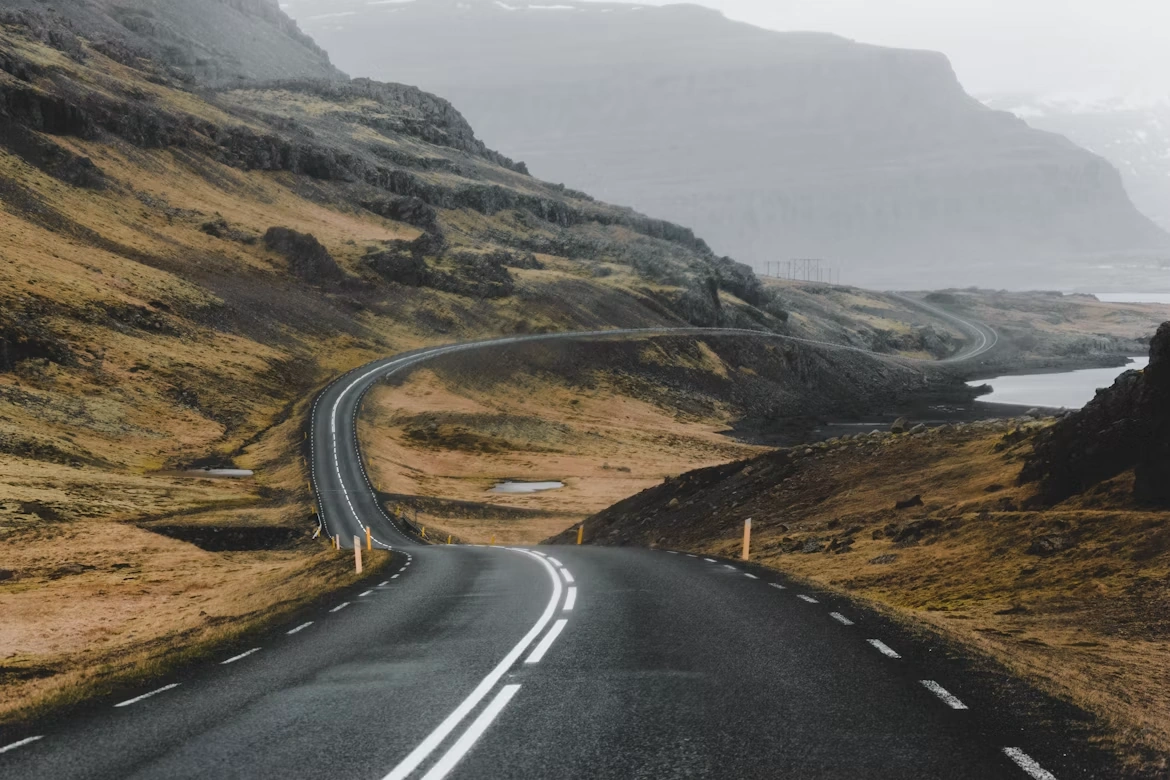
Most Ring Road guides show you a map with a circle drawn around it and call it a plan. The actual planning happens in the details that never make it onto a map — how far apart the gas stations really are, which bridges only fit one car at a time, and why the same 800-mile loop can take five days or fourteen depending on a decision most people don't even know they're making.
How many days you actually need
Seven days is the minimum for the full loop without it feeling like a driving marathon. Ten to twelve is comfortable. Fourteen lets you build in weather buffer days, which — in Iceland — you genuinely want, because "the road is technically open" and "you should drive on it right now" are two very different statements in December.
The mistake most first-timers make isn't picking too few days. It's assuming every day covers similar distance. The south coast, between Reykjavik and Vik, is packed with stops every 10–15 minutes — you'll cover maybe 100 miles in a full day. The east fjords are the opposite: long, quiet stretches where you might drive two hours between anything worth stopping for. Budget your days by density of stops, not by miles on the odometer.
Gas stations are further apart than you think
This is the detail that catches people off guard most. On the south coast and around Reykjavik, stations are frequent. Once you're past Höfn heading into the east fjords, or crossing the northern stretches between Akureyri and Egilsstaðir, stations can be 60–100 miles apart — and some rural pumps are card-only, unattended, and occasionally out of service with no one around to fix it.
"The rule that actually works: fill up whenever you're below half a tank, not whenever you're low. In Iceland, 'I'll get gas at the next town' is a bet you don't always win."
Single-lane bridges are a real thing, and there's an etiquette
Several bridges on the Ring Road, especially in the south and east, are only wide enough for one car. Whoever reaches the bridge first has the right of way — but "reaches first" gets fuzzy at speed, and Icelandic drivers are generally relaxed about waving the other car through. Slow down well before you can see the far end clearly. This isn't a hazard to be scared of, just something nobody mentions until you're already on one.
F-roads are a different trip entirely
The interior highland F-roads (anything numbered F followed by digits, like F208 or F35) are gravel, often require a 4x4, frequently have unbridged river crossings, and are typically closed until mid-June and shut again by September — sometimes later or earlier depending on that year's weather. A standard rental car is not insured on these roads, and regular Ring Road planning does not need them at all. If someone's itinerary has you on an F-road in a normal car, that's worth double-checking before you go.
Winter changes almost everything, not just the scenery
Driving the Ring Road in winter is genuinely doable and genuinely different from a summer trip. Daylight can shrink to 4–5 hours in December. Road conditions change fast enough that checking road.is (Iceland's official road conditions site) each morning isn't optional, it's routine. Studded tires are standard on rental cars in winter for a reason. None of this means winter is a bad idea — the Northern Lights and the near-empty roads are worth it — but a winter Ring Road trip should be planned as its own thing, not a colder version of the summer one.
The direction you drive changes the trip
Most people default to clockwise from Reykjavik, which front-loads the famous south coast (Skógafoss, Reynisfjara, the glacier lagoon) in the first two or three days. Going counter-clockwise flips this — you'll hit the quieter west and north first, and save the south coast's big-name stops for the end. Neither is "correct," but if your trip is under 7 days, going counter-clockwise means you're less likely to run out of time before reaching the most photographed stretch of the whole route.
For the destination-level overview — where to stay, budget ranges, and best time to visit — see our Iceland destination guide. This post is meant to sit alongside it, not replace it.



Want a Ring Road itinerary built around your actual dates, weather patterns, and pace? The GoAtlas team can plan the logistics for you, gas stops and all.
Speak with the GoAtlas Team