Explore by Region
South America
From Andean ruins to Amazon rainforest and Patagonian glaciers — real, fully-built destination guides, with more being added.
From Andean ruins to Amazon rainforest and Patagonian glaciers — real, fully-built destination guides, with more being added.
The Andes run the length of South America, and nearly everything about the continent's geography reads as a variation on that single mountain spine. Patagonia is where the range finally meets the sea in wind-scoured fjords and granite towers. Machu Picchu sits built directly into the mountains' folds, a civilization that adapted to altitude rather than avoiding it. The Amazon spreads out from the Andes' eastern slopes into the largest rainforest on Earth, a genuinely different register of nature entirely.
That range extends to how people actually settled the continent. Cartagena's colonial walls carry Spanish history along the Caribbean coast; Buenos Aires built a European-inflected identity around its own Atlantic port, distinct from the Andean interior a flight away. The Galápagos, isolated far off the Ecuadorian coast, evolved almost entirely apart from the mainland's influence.
GoAtlas's South American guides follow that same range — coastal cities, high-altitude ruins, glacial wilderness, and genuine island isolation — because the continent was never one landscape to begin with.

The Inca citadel, genuinely as breathtaking as the photos

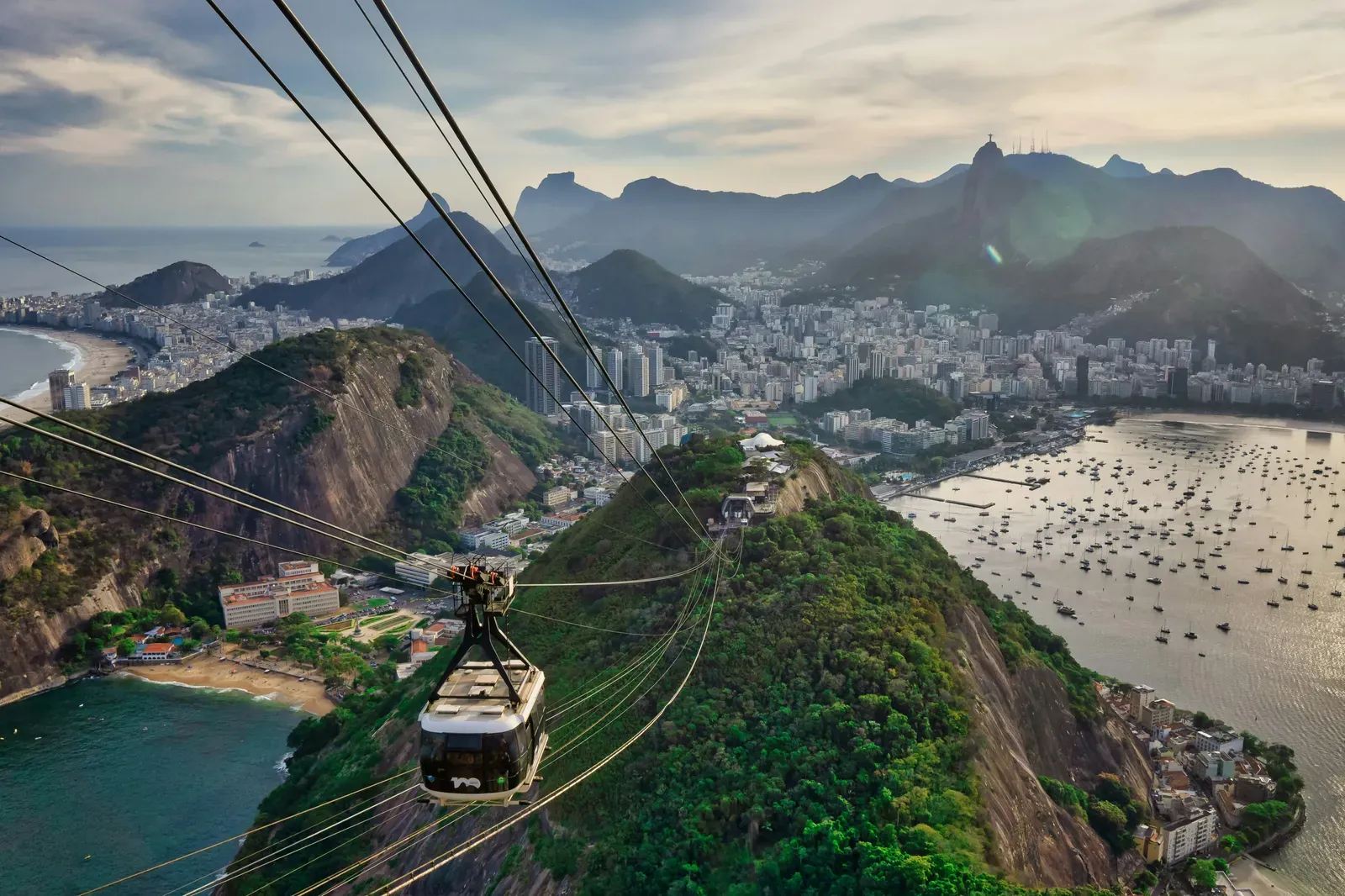
Christ the Redeemer, Copacabana, and genuine Carnival energy

Tango, steakhouses, and genuine European-Latin fusion

Glaciers, granite towers, and genuinely raw wilderness

A genuinely walled colonial city on the Caribbean coast

Wildlife found genuinely nowhere else on Earth

Genuinely wider than Niagara, taller than Victoria Falls

A genuinely underrated Andean capital, street art and all

A genuine wine country base ringed by the Andes

Genuinely one of South America's best food cities

Genuinely the largest rainforest on Earth, jungle lodges included

The world's largest salt flat, a genuine mirror to the sky

The moai statues, genuinely one of the most remote places on Earth

A genuinely transformed "City of Eternal Spring"